A back that's locked or gone into spasm
A sudden back spasm or other lower back pain, including pain running down the leg (sciatica).
Open today, including Sundays and public holidays. A physiotherapist comes to you, after hours too. Call (02) 8111 5633, answered 24/7.
It's Sunday afternoon and you've gone down on the field. The knee has swollen fast, you can't put weight through it properly, and nobody around you is sure whether this is a hospital problem or a Monday problem.
Or it's 9pm on a Tuesday, your back has locked up, and you're a sole trader with a job booked in the morning that doesn't happen if you can't lift.
Both of those are real, and neither of them fits neatly into a clinic's opening hours. The usual options are to sit in an emergency department for several hours with something that isn't a medical emergency, or to take painkillers, hope, and wait until someone opens on Monday.
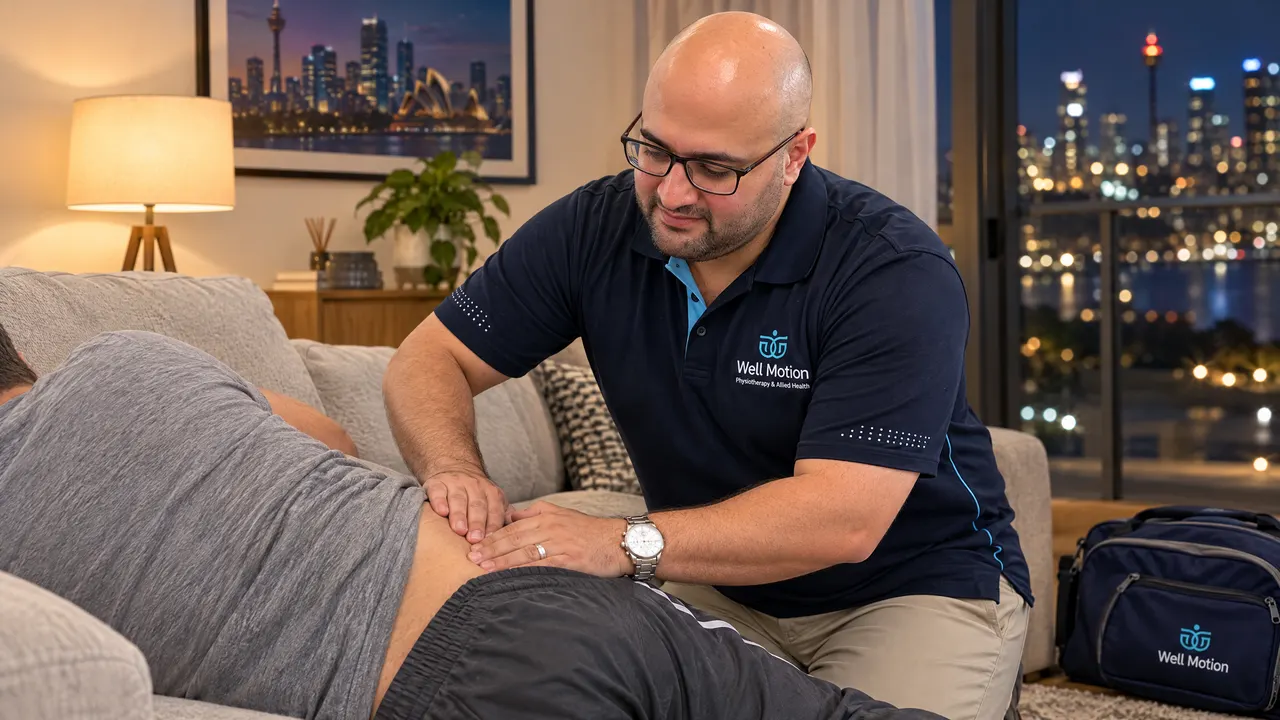
We're the third option. A physiotherapist comes to you (at home, at the club, on site) outside business hours, on weekends, and on public holidays.
You get hold of us. You describe what's happened, when, and what you can and can't do right now. If it sounds like something that needs a hospital rather than a physiotherapist, we'll tell you that on the spot rather than book a visit.
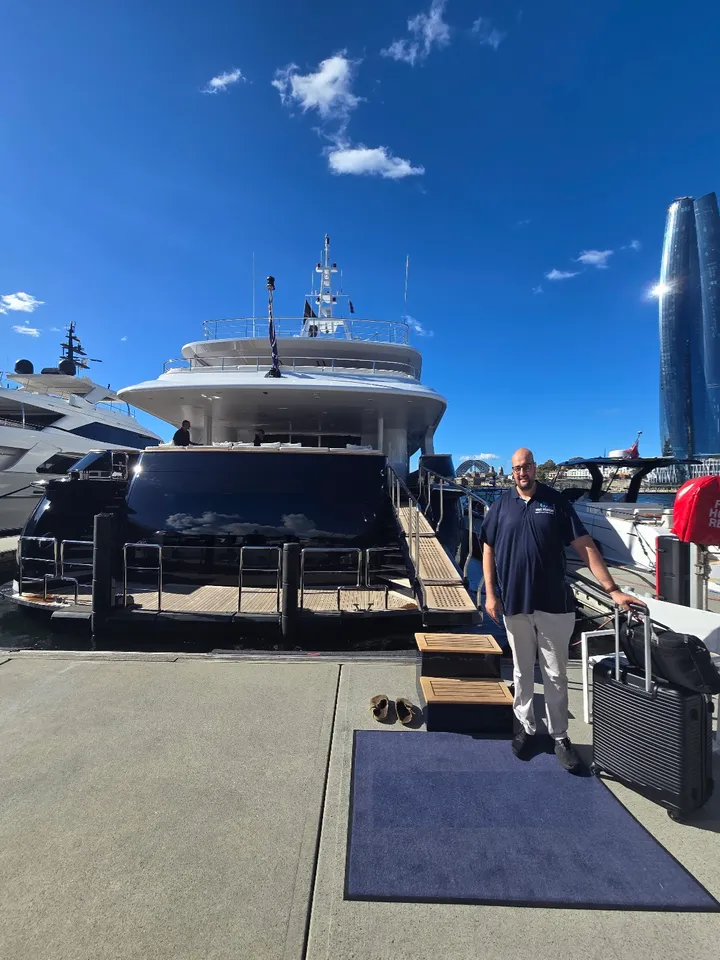
We come to you. Your house, the club, the worksite, wherever you are. Nothing gets loaded into a car, and nobody drives anywhere in pain.
We assess properly. Not a quick look. What happened, how it happened, what you felt, what you can move, what you can weight-bear through, and what the joint or muscle is actually doing. This is the same assessment you'd get in a treatment room. It's just happening on your lounge room floor.
We tell you what we think is going on. In plain English, including how confident we are. If we think you need an X-ray, a scan, or a doctor, you'll hear that clearly and you'll hear why.
We treat what can be treated now. Settling the acute pain, protecting the area, strapping or offloading it, and getting you moving safely enough to sleep and to get through tomorrow.
You finish with a plan for the next few days. What to do, what to avoid, what should be improving by when, and what would mean you need to be seen again sooner. Your plan and any exercises reach your phone and inbox the same way they would after a clinic appointment.
Most after-hours callouts are one of a handful of things. Each one links to a fuller guide.
A sudden back spasm or other lower back pain, including pain running down the leg (sciatica).
An acutely stiff or painful neck, or whiplash after a car accident.
An ankle sprain or a knee injury that swelled fast and won't take your weight.
Sore, stiff and not sure what's damaged. If we suspect a break we'll tell you it needs an X-ray, and casting and rehab afterwards run through our Fracture Clinic.
Stiffness or a flare-up partway through post-surgical rehabilitation. If it looks like something for your surgeon or a hospital, we'll send you there.
Most physiotherapy is built around a working week. Ours is too, most of the time: our clinics run standard hours, Monday to Friday, with limited Saturday cover at Mount Annan.
That's precisely the gap this service exists to fill. In Australia, "after-hours" formally means after 6pm and before 8am on weekdays, before 8am and after midday on Saturdays, and all day Sundays and public holidays 2. That's most of the week. It's also when people play sport, do the jobs they couldn't get to during the week, lift things at home, and injure themselves.
Weekend sport. Saturday and Sunday are when most community sport happens and when a good share of acute soft-tissue injuries occur. Waiting until Monday means two days of guessing, two days of swelling, and two days of loading something you shouldn't be loading.
Work you can't afford to lose. If you're a tradie, a sole trader, or on a roster, "come back Monday" isn't advice. It's a lost day. Getting assessed on the night it happens often changes what Monday looks like.
Public holidays. Long weekends are when clinics close, sport continues and people take on the jobs they've been putting off. We run through them.
At home, after everyone's asleep. Late-evening back spasms, a locked neck, a fall: the kind of thing that doesn't warrant an ambulance but absolutely doesn't wait comfortably until morning.
If what you actually want is a physiotherapist at home for a routine appointment, rather than an urgent one, that's a different service: mobile and in-home physiotherapy covers planned visits during normal hours.
We'd rather be straight with you about this than take a booking we shouldn't.
Emergency departments exist for people who are seriously ill or injured: chest pain, stroke symptoms, trouble breathing, bleeding that won't stop, loss of consciousness 1. If any of that is happening, call triple zero or go to an ED. Don't call a physiotherapist.
There's a second, less obvious reason to know the difference. Arrivals at an ED are triaged into five urgency categories, and the target waiting times run from two minutes for the most urgent through to two hours for the least 1. A sprained ankle or a locked back is, correctly, at the back of that queue, behind everyone more unwell than you, all night, however much it hurts.
What we're for is the middle ground: an acute musculoskeletal injury that needs assessing and managing tonight, by someone qualified to tell you what it is, and to tell you when it's something we shouldn't be handling. Screening for the things that need medical attention rather than physiotherapy is part of any proper assessment, and it doesn't stop being part of it because it's 10pm.
We come to you across Greater Sydney, except the north-east (Hornsby, the Upper North Shore and the Northern Beaches). Here is how that breaks down.
Sydney CBD, east and south: the City of Sydney, Woollahra, Randwick, Waverley, Bayside and Georges River, including Sydney CBD, Darlinghurst, Surry Hills, Bondi Junction, Bondi, Double Bay, Randwick, Coogee, Maroubra, Hurstville, Oatley, Peakhurst and Panania.
Inner west: Leichhardt, Rozelle, Haberfield, Drummoyne, Five Dock, Concord and Strathfield.
Lower North Shore: as far as Chatswood and Lane Cove.
West and north-west: Strathfield, Parramatta, Cumberland, Blacktown, Fairfield and The Hills Shire, out to Penrith.
South-west, Macarthur and Wollondilly: Liverpool, Camden, Campbelltown and Wollondilly, including suburbs such as Casula, Moorebank, Prestons, Gregory Hills, Oran Park, Harrington Park, Leppington and Appin.
Sutherland Shire: the whole Sutherland Shire, where our Engadine clinic is based.
If your suburb isn't listed, check your suburb or ask when you call. We'll tell you straight away whether we can reach you.
During business hours you're also welcome at our clinics in Engadine, Mount Annan, Narellan and Appin.
Available 24/7 across Greater Sydney
Go to an emergency department, or call triple zero, for anything seriously ill or injured: chest pain, stroke symptoms, difficulty breathing, bleeding you can't control, or loss of consciousness 1. Call us instead for an acute musculoskeletal injury that needs looking at now but isn't a medical emergency: a joint that's gone over and swollen fast, a back that's locked up, a muscle tear, a fall you've walked away from but can't move properly after. If you're genuinely unsure, ring us and describe it. Telling you to go to hospital costs us nothing and is sometimes the right answer.
Yes. We're open every Sunday and public holiday, and we come to you. Weekends and public holidays are a large part of why this service exists. Formally they're "after-hours" along with weekday evenings and early mornings 2, and they're also when community sport runs and when clinics are shut. Our clinics keep standard weekday hours; the mobile emergency service doesn't.
It depends on where you are and the time of day. Call us and we'll give you an honest arrival time before you commit to anything.
Greater Sydney, except the north-east (Hornsby, the Upper North Shore and the Northern Beaches). That includes the Sydney CBD and eastern suburbs, the Lower North Shore as far as Chatswood and Lane Cove, the Sutherland Shire, Macarthur, Wollondilly and Western Sydney. You can check your suburb, or just ask when you call.
No. You can call us directly. If the injury happened at work or in a car accident, mention it when you call, because the paperwork is different.
Yes. We come to wherever you are inside our coverage area: your home, a worksite, the clubhouse or the sideline. All we need is a safe, reasonably private spot with enough room for you to lie down.
A clear space about the size of a bed, loose clothing that lets us see the injured area, a list of any medication you take, and any scans, reports or discharge papers you have for this injury. It also helps to know exactly how and when it happened.
How would you like to reach us?
Message us on WhatsAppFor bookings and enquiries. Please don't send medical details. Call (02) 8111 5633Request a call-back
Request sent
Thank you. We'll call you back on the number you gave us.
This is a preview, so nothing was actually sent.