Engadine
996 Old Princes Hwy, Engadine NSW 2233
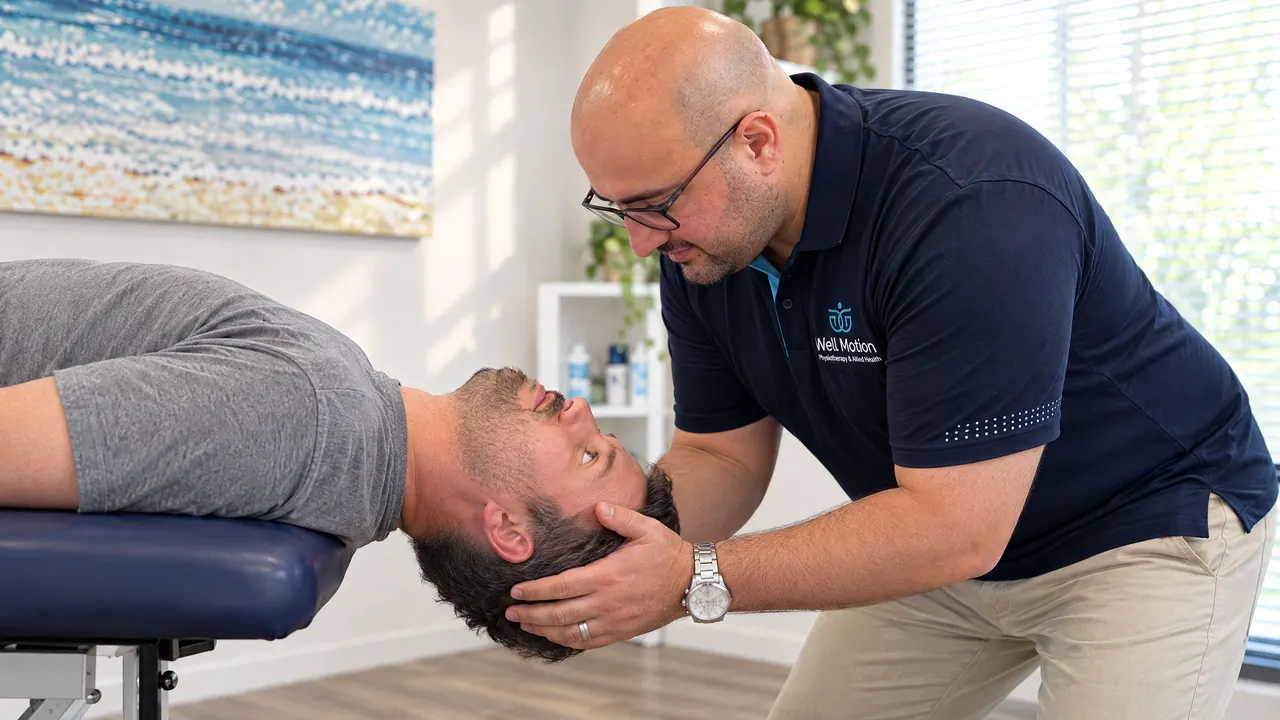
The room tips when you roll over in bed. Or you stand up from the couch and have to put a hand on the wall until it passes. You've had the blood tests, maybe a scan, and been told everything looks fine: take it easy, be careful on the stairs, it should settle down on its own.
Being told nothing is wrong isn't the same as being told what is. And "be careful" isn't a plan. Dizziness that keeps coming back usually has a cause worth naming, and once it's named there is usually something structured to do about it. Because dizziness can make a long drive across Sydney hard, vestibular physiotherapy is offered at the clinic nearest you: Engadine, Appin, Mount Annan or Narellan.
"Vestibular" refers to the balance system of the inner ear. Vestibular physiotherapy is the part of the profession that works with people whose dizziness, unsteadiness or balance trouble comes from that system, rather than from a joint or muscle that's been injured or overloaded.
In practice that means the people who end up on this page are rarely in pain. They're the ones who have stopped driving at night, who plan their day around not having to look up at a high shelf, or who have quietly given up the things that involve a crowd and a hard floor. The problem isn't always big enough to sound serious when you describe it. It's usually big enough to have changed how you live.
We start with what you actually mean by "dizzy." It's a single word doing a lot of work. Spinning is one thing, lightheaded is another, and "unsteady on my feet" is a third, and people use all three interchangeably when they describe it. Pinning down which one you mean isn't a formality. It shapes everything after it, so expect to be asked to describe it more than once, in more than one way.
Then what sets it off, and what it does afterwards. Whether it happens when you roll over, when you stand up, when you turn your head quickly, or for no reason you can pick. Whether it lasts seconds, minutes or the better part of a day. Whether it comes on its own or brings other things with it. Whether this is the first time or the fifth. These answers narrow things down faster than almost anything else.
Then a structured physical assessment. This is what separates a proper assessment from being told to take it easy: we look at how steady you are standing and walking, how you're holding yourself, what you're bracing against without realising it, and how your symptoms respond when we change what you're doing. You're not expected to push through anything. Tell us when something feels wrong and we'll work around it.
You leave with an explanation and a plan. What we think is driving it, in plain English. What the program involves and what your part of it is. What to do between appointments, and what would make us send you back to your GP rather than keep treating you. If we don't have a clear answer yet, you'll be told that too, along with what we'd want to check next.
Most people who come to us for dizziness have already been managing it for a while, and the management has mostly meant avoiding things. Fewer stairs. No ladders. Standing up slowly. A hand on the trolley. None of that is unreasonable advice, but it isn't treatment, and over months it tends to shrink your life a little at a time without ever quite fixing the problem.
The point of a structured vestibular program is the opposite. It's built around a working explanation of what's happening, with a plan that changes as you do, and it's meant to be checked: you and your physiotherapist should both be able to tell whether you're better than you were a month ago, and by what. That's a different conversation from "be careful."
It also means telling you where the limits are. Not every cause of dizziness has a quick fix, some need input from your GP or a specialist alongside physiotherapy, and we'd rather say so at the first appointment than string out a program that isn't working. Where physiotherapy is the right tool, the work is yours as much as ours: most of what changes happens between appointments, which is why the program you leave with has to be one you can stick to.
The rest of what we offer is on our services page.
Both send people looking for the same words ("unsteady," "off balance," "I don't trust my legs"), but they lead to different programs, and booking into the wrong one wastes your time.
If the trouble starts with a sensation (the room moving, a swimming feeling when you change position, a head that doesn't settle after you turn it), that's what this page is for. The work is directed at the balance system itself.
If there's no dizziness and the issue is that your legs aren't as reliable as they were (you're slower getting out of a chair, less confident on uneven ground, you've had a fall or a near-miss), that's a strength, confidence and fall-risk problem, and it's what our Falls Prevention program is built for.
Plenty of people have some of both, and that's fine. It's a question we can sort out at the first appointment rather than something you need to diagnose yourself before booking.
If you want to read about vertigo itself (what it is and what's behind it), that's covered properly on our Vertigo & Dizziness page. The exercises used for BPPV are explained in What Is Vertigo? Exercises for BPPV Explained.
This matters more than anything else on this page, so it's worth reading even if you skim the rest.
Get emergency help immediately (call 000) if sudden, severe dizziness or vertigo comes with any of:
Those can be signs of a stroke or TIA. They are not a physiotherapy problem, and they are not something to wait out or book an appointment for. If you're unsure, treat it as urgent. That is the right call every time.
Dizziness that's new, getting worse, or arrives with a bad headache, a head injury, fever, hearing loss or ringing in one ear should also be seen by your doctor first, not booked straight in with us.
Vestibular physiotherapy is available at each of our clinics:
996 Old Princes Hwy, Engadine NSW 2233
Shop 11/13 Main St, Mount Annan NSW 2567
22 Sharman Cl, Harrington Park NSW 2567
49 Appin Rd, Appin NSW 2560
All are reachable on (02) 8111 5633.
If getting to a clinic is difficult because of the dizziness itself, say so when you book. Bring someone with you if you'd feel better having a lift home. It's a sensible precaution, not an overreaction, and plenty of people do it for a first appointment.
A lot, which is why the first appointment is an assessment rather than a treatment. People use "vertigo" for several different experiences: a true sense of the room spinning, the lightheadedness of standing up too fast, a floating or foggy feeling, and plain unsteadiness on the feet. They can point in quite different directions, and some of them aren't physiotherapy problems at all. Part of what the assessment does is rule things in and out, including working out whether you should be seeing your GP first. If what you're describing turns out to sit outside what physiotherapy treats, we'll tell you at the first appointment rather than start a program anyway.
Not with a single exercise off the internet, and not by waiting it out and hoping. It depends entirely on what's causing it, which is why this page can't give you a technique and shouldn't pretend otherwise. What a structured vestibular program does is work from a proper assessment to a plan aimed at your specific cause, then adjust it as you respond, with checkpoints so you can both see whether it's working. Some people improve quickly. Some need a longer program, or input from a doctor alongside it. You'll get a realistic picture at the first appointment rather than a promise at the start.
Usually it's miserable rather than dangerous, but the important exception is worth knowing cold. Sudden severe vertigo with slurred speech, facial drooping, limb weakness or vision loss needs emergency care immediately, not a physiotherapy appointment. Those are possible signs of a stroke or TIA. Outside that, dizziness that's new, worsening, or comes with a head injury, bad headache, fever or hearing changes should go to your doctor first. Persistent dizziness that's already been medically checked is the situation vestibular physiotherapy is built for.

How would you like to reach us?
Message us on WhatsAppFor bookings and enquiries. Please don't send medical details. Call (02) 8111 5633Request a call-back
Request sent
Thank you. We'll call you back on the number you gave us.
This is a preview, so nothing was actually sent.