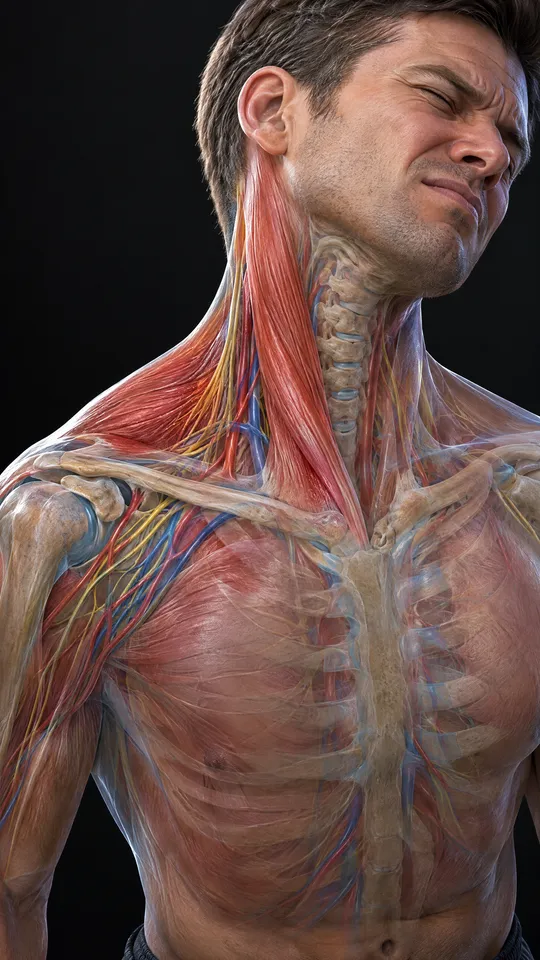
Wry neck, or something else? How to tell the difference
Most stiff, twisted necks are muscular. Not all of them are, and the list of alternatives is longer than most people expect: trauma including fracture or dislocation, infection in the head, neck, spine or chest, inflammatory conditions, a reaction to certain medications, eye problems, and rarely a tumour 1,2.
A few practical distinctions:
It followed an accident or a collision. Trauma sits at the top of the differential for a reason 2. If your neck locked up after a car accident or a heavy tackle, that's a different pathway: see Whiplash.
It started after a new medication. Some drugs cause an acute dystonic reaction that looks very much like wry neck: metoclopramide, an anti-nausea medication, is the one guidelines name specifically 2. Mention it to your GP before you assume you slept badly.
You're over 40, or it keeps coming back. Wry neck is more common in younger people, and in rare cases, particularly over 40, there's an underlying medical condition behind it, not a mechanical one 3. Recurrent, grumbling neck trouble between episodes is usually a different story again: see Neck Pain.