Need urgent care? 24/7 Mobile & After-Hours Emergency Physiotherapy Call (02) 8111 5633 For life-threatening emergencies, always call 000
Lower Back

Back Spasm (Thrown-Out or Locked Back)

5.0 average rating on Google
Registered NDIS Provider
SIRA Registered Provider

You bent to pick up a sock, or twisted to reach the back seat, and something grabbed. Now you're stuck half-bent, holding the bench, and every attempt to straighten sets it off again.

That's a back spasm. It feels like serious damage and it almost never is. More than nine in ten cases of back pain aren't caused by a serious medical problem 1, and most low back pain gets better within a few weeks 2.

What's actually causing it

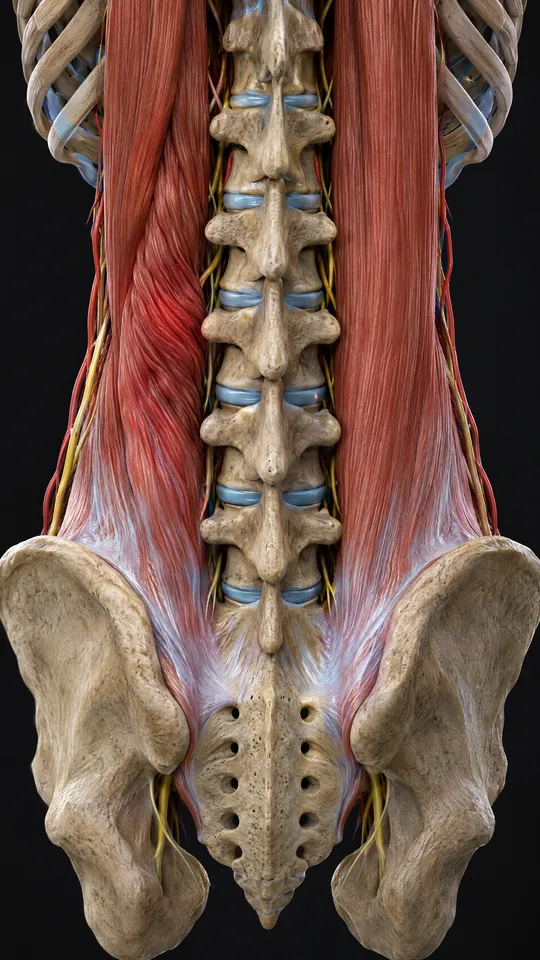
A back spasm is a sudden, involuntary tightening of the muscles alongside your spine. The muscles clamp down, the back stiffens, and movements you never think about (standing up, rolling over, putting on shoes) become things you have to plan. Clinicians usually file it under acute lower back pain, and most often under "non-specific" low back pain, which means no single damaged structure can be named as the cause.

It is common. About eight in ten people have non-specific low back pain at some time, most often between the ages of 35 and 55 2.

Lower back from behind showing the spine with a column of muscle on each side, one bunched and tight, the other relaxed

What a back spasm feels like

A grab or cramp across the lower back, often to one side. A back that feels locked, so you stand leaning forward or tilted to one side. Sharp catches when you move, and a dull ache when you hold still. Spasms are one of the recognised ways low back pain is felt 2.

If it's your neck that has locked, that's a different page: see neck pain.

"I threw my back out": what has actually happened

Nothing has gone "out". No bone has slipped and nothing needs to be put back "in". What people call a thrown-out or locked back is usually the muscles guarding the area after a movement it didn't like: a lift, a twist, a long drive, or sometimes nothing you can point to.

Stress plays a part too. It increases muscle tension and spasm 1, which is why a spasm so often arrives in a bad week.

Spasm, disc, facet joint or sciatica? How to tell the difference

A spasm is a symptom, and a few different things can sit underneath it.

Sciatica is pain that travels down the leg, often with pins and needles or numbness. If your pain is in your back and stays there, it probably isn't sciatica.

Lumbar disc bulge can set off a spasm, and it's one of the things we look for when spasms keep coming back.

Facet joint pain comes from the small joints at the back of the spine. A facet joint that has stiffened suddenly is one of the things people mean by a "locked back", and it tends to hurt most when you arch or twist.

You can't sort these out yourself from a list, and you don't have to. That's what the assessment is for.

Back spasm: what to do in the first day or two

  1. Keep moving as much as you can. Keeping active is the most effective way to manage this kind of back pain, and resting can make it worse 1.
  2. If you need to lie down, keep it short. Don't rest your back for more than a day or two 2.
  3. Use heat. It can help with blood flow, pain and muscle relaxation 2.
  4. Start with easy activity: walking, walking in a pool or swimming 2.
  5. Ask a pharmacist or your GP about pain medicines. Physiotherapists don't prescribe them.
  6. Check the warning signs at the bottom of this page. If you have none, get it assessed.

If you can't move

Change position slowly and in stages: roll onto your side, bring your knees up, push up with your arms. Short, frequent movements are better than one heroic attempt to stand.

A back that won't let you move is exactly what we come out for. If it happens after hours, on a weekend or a public holiday, our after-hours emergency physiotherapy can come to you. Call (02) 8111 5633. We assess you, treat what can be treated on the spot, and tell you plainly if it needs a hospital.

Heat or ice?

The Australian guidance behind this page recommends heat, to help blood flow, pain and muscle relaxation 2. It doesn't give a rule about ice, and we're not going to invent one. If a cold pack feels better to you, that's a reasonable thing to use.

Rest or keep moving?

Keep moving. Resting can make back pain worse 1, and you shouldn't rest your back for more than a day or two 2. The UK guideline says the same: carry on with normal activities as far as you can 4. Moving while it hurts is not doing damage.

What about pain relief medicines?

That's a conversation for your pharmacist or GP, not for us. For context: paracetamol has not been shown to be effective for back pain 1, and the UK guideline says not to offer it alone, and to consider an anti-inflammatory at the lowest effective dose for the shortest time 4. Whether an anti-inflammatory is safe for you depends on your health and your other medicines.

How it's diagnosed

In the room, by listening and examining. The Australian clinical care standard for low back pain starts with a clinical assessment: a targeted history, a physical examination, and a focused check of the nerves when your symptoms call for it 3.

We ask what you were doing when it started, where it hurts, whether anything travels into your legs, and about your bladder and bowel, because that question matters even when you came in about a muscle. Then we look at how you move, what eases it and what sets it off.

Scans are not routine. Imaging is reserved for when something more serious is suspected 3, and the UK guideline says not to offer it routinely 4. If we think you need one, we'll tell you why and refer you.

How we treat it

The first session is about settling the spasm enough for you to move, and working out what set it off.

You'll leave with a clear explanation and a plan for the next few days. Advice and encouragement to keep up normal activity is the first thing the guidelines recommend 4, and patient education and self-management are two of the eight quality statements in the Australian standard 3. So that part is treatment, not small talk.

Hands-on treatment has a place too. The UK guideline supports manual therapy (mobilisation, manipulation or soft tissue techniques such as massage), but only as part of a package that includes exercise 4. That is how we use it: to get you moving, with the exercise doing the lasting work.

If you can't travel while it's bad, mobile physiotherapy brings the same assessment to you.

Other treatments we may use

Dry needling.

A fine needle into a muscle that won't let go. The low back pain guidelines behind this page don't test dry needling, and the UK guideline does not recommend acupuncture for low back pain 4. They are different techniques, but we'd rather tell you where the evidence stops. We use it selectively, alongside movement, never instead of it.

What we don't use.

The UK guideline says not to offer traction, ultrasound, TENS, interferential therapy, belts or corsets for low back pain 4. You won't be put on a machine here.

Medicines, injections and scans.

These sit with your GP or a specialist. We'll refer you when that's what you need.

Your recovery path: Reset, Rebuild, Return

A spasm is the back guarding itself, so The Well Motion Recovery Path™ starts by calming things down and then builds up what your back will tolerate. You move up a phase when your back allows it, not when a date arrives.

  • Reset: from the first visit. We settle the spasm, get you moving and keep you active with heat and easy walking 1,2. Expect good and bad hours for the first few days. We move you on once you can stand straight, walk comfortably and get in and out of a chair without bracing.
  • Rebuild: an exercise program built around what set it off, through our exercise prescription and conditioning programs. Exercise is part of every package the guidelines support 3,4. We move you on when lifting, bending and a full day's work no longer stir it up.
  • Return: the things you actually do: lifting the kids, the job, the sport. We test those tasks directly. You leave with a plan to keep going, because exercise can help prevent this kind of back pain 2.

How long it usually takes. Low back pain usually gets better after a few weeks 2. We can't give you a number of days for a spasm, because no source we trust gives one.

Reducing your risk of it coming back

Two things have been tested.

  • Keep exercising. Exercise can help prevent non-specific low back pain 2.
  • Walk to a plan. In a trial of 701 Australian adults who had just got over a bout of low back pain, half were given a walking program that built up over six months. They went a median of 208 days before pain next limited their activity. The group without the program went 112 5.

We haven't listed lifting technique, posture or mattresses. They may matter for you, but we can't point to a tested result for them, so we look at them in your assessment and don't promise them on a page.

When to get it checked properly

Go to your nearest emergency department, or call 000, if you have back pain with any of these 1:

  • loss of control of your bladder or bowel, or you can't pass urine
  • numbness between your legs or around your bottom
  • legs you can't move or can't feel
  • a fever, or feeling unwell with the pain

See a GP promptly if the back pain comes with unexplained weight loss, a history of cancer, or you are prone to infections 1,2.

For everything else, including pain that came on suddenly and is severe, pain after a fall or an accident, and a back that won't let you walk or move, call us. Healthdirect's own list sends those to an emergency department too 1. They also describe an ordinary bad spasm, and sorting one from the other is our job: we assess you and tell you plainly if it needs a hospital.

If this starts after hours, on a weekend or a public holiday, and you have none of the warning signs above, our after-hours emergency physiotherapy can come to you. Call (02) 8111 5633.

Your first appointment

We start by listening: how it began, what makes it worse, and what it's stopping you from doing. Then we examine the area, explain what we find in plain English, and agree a plan with you. Your first visit is 40 minutes at Engadine and 30 minutes at our other clinics.

We see patients at Engadine, Mount Annan, Narellan and Appin, and at home through our mobile physiotherapy service. If you have private health cover, here's how health fund rebates work for physiotherapy.

FAQs

How long does a back spasm last?

Low back pain usually gets better after a few weeks 2. The worst of a spasm tends to ease sooner than that, but no source we trust gives a number of days, so we won't either. If it isn't improving, get it assessed.

What is the fastest way to stop a back spasm?

There's no instant method. What the guidance supports is heat, gentle movement and not staying in bed 1,2. An assessment works out what set it off, which matters more than how quickly this one stops.

What can be mistaken for a back spasm?

Sciatica, a lumbar disc bulge and facet joint pain can all start with a back that grabs. Pain with a fever, or with bladder or bowel changes, is not a spasm and needs urgent medical care 1.

Why can't I stand up straight after my back went?

The muscles on one side are holding tighter than the other, so they pull you forward or to the side. It looks alarming and usually settles as the spasm eases. If it comes with weakness or numbness in your legs, treat it as urgent.

Should I go to hospital for a back spasm?

Not for the spasm itself. Go for back pain with loss of bladder or bowel control, numbness between your legs, legs you can't move or feel, or a fever 1. For a spasm without those, call us.

Are stretches good for a back spasm?

Gentle movement is. Australian guidance lists floor stretches alongside walking and swimming as ways to get going again 2. We haven't put a routine on this page: our gentle lower back stretches article covers that, and the right ones depend on what's underneath your spasm.

More Lower Back conditions

If your back has gone and you'd like to know what set it off, not just wait for the next one, book an assessment at Engadine, Mount Annan, Narellan or Appin, or browse the Lower Back section of our Injury Finder.

Book an Assessment
Ahmed Elsayed, Principal Physiotherapist
Reviewed by Ahmed Elsayed Principal Physiotherapist at Well Motion

References

  1. Back pain: an overview. healthdirect (Australian Government). Last reviewed June 2024. https://www.healthdirect.gov.au/back-pain
  2. Low back pain. healthdirect (Australian Government). Last reviewed February 2025. https://www.healthdirect.gov.au/low-back-pain
  3. Low Back Pain Clinical Care Standard. Australian Commission on Safety and Quality in Health Care, 2022. https://www.safetyandquality.gov.au/clinical-care-standards/low-back-pain
  4. Low back pain and sciatica in over 16s: assessment and management (NG59). National Institute for Health and Care Excellence, 2016, last updated 2026. https://www.nice.org.uk/guidance/ng59
  5. Pocovi NC, Lin CC, French SD, et al. Effectiveness and cost-effectiveness of an individualised, progressive walking and education intervention for the prevention of low back pain recurrence in Australia (WalkBack): a randomised controlled trial. The Lancet, 2024;404(10448):134-144. https://pubmed.ncbi.nlm.nih.gov/38908392/