Post-Surgical Rehabilitation
The operation is done. You've been sent home with a sling or a brace or a set of crutches, a sheet of instructions, and a follow-up appointment some weeks away. What happens between now and then is largely up to you, and nobody has really explained what that should look like.
That gap is where most of the recovery happens, and where most of it gets lost. Post-surgical rehabilitation is the structured version of it: a staged program that takes you from wherever you are today back to the things you were doing before, built around your surgeon's protocol and not a photocopied exercise sheet. Wherever in Sydney the operation was done, post-surgical rehabilitation can happen closer to home, at our clinics in the Sutherland Shire, Macarthur and Wollondilly.
Who books this
Usually someone a week or two out from an operation, holding a piece of paper they've read four times and still aren't sure how to act on.
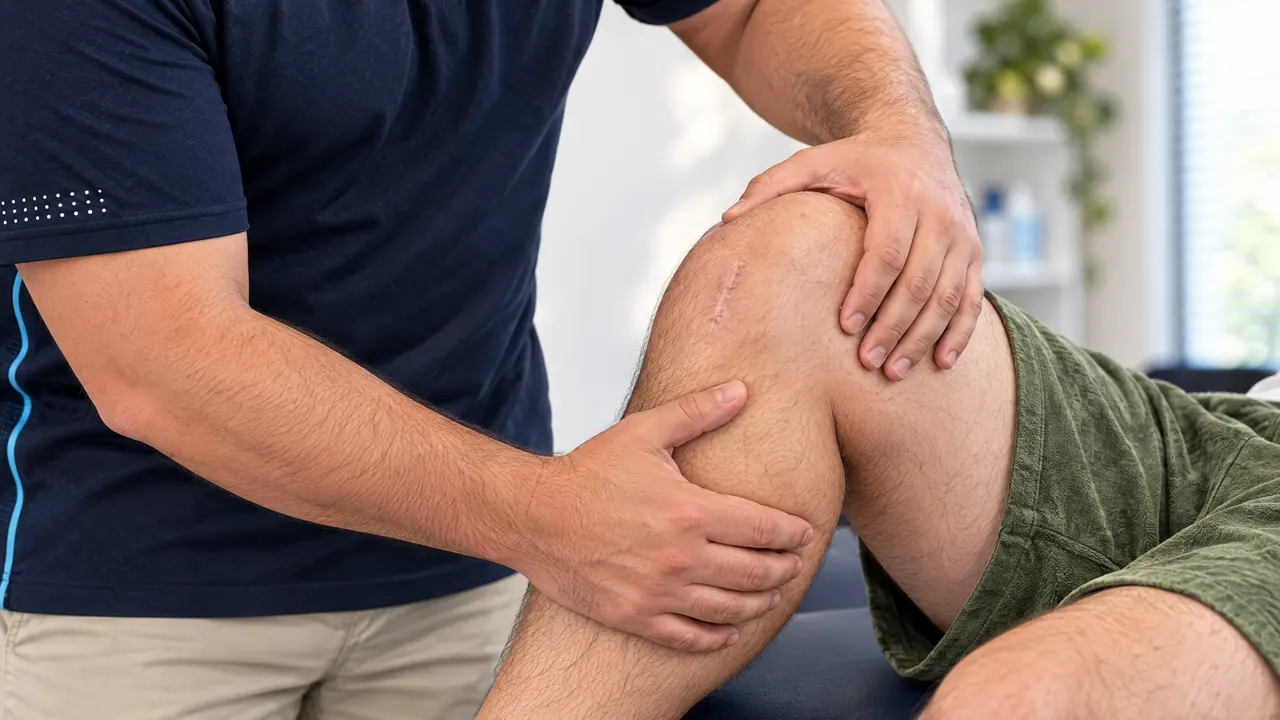
Sometimes it's a knee, and the instruction is to bend it to a certain point without any explanation of how to get there. Sometimes it's a shoulder that's been immobilised and now needs to move again without doing damage. Sometimes it's a back, where the fear of undoing expensive surgery is limiting movement more than the surgery itself is.
Some people come to us later than that: cleared long ago, but stuck a long way short of where they expected to be. That's a common story, and it isn't too late to work on.
If you're here because you're still weighing up what's ahead, the condition pages explain the injuries themselves in plain terms: an ACL injury, a meniscus tear, a lumbar disc bulge.
What an appointment looks like
We start with the protocol. What was done, when, and exactly what your surgeon has written about what you can and can't do: the weight-bearing status, the range limits, the brace settings, the timeline for each restriction lifting. Bring the document, the discharge summary, and anything the hospital gave you. Everything downstream is built on it, so we'd rather read it than reconstruct it from memory.
Then we assess where you actually are. How the joint moves today, how much load the limb will take, how you're walking or reaching or sleeping, what's swollen, and what you've stopped doing since the operation. We're looking for the specific things standing between you and the next stage, and for the compensations that have already crept in, because those tend to outlast the surgery.
We tell you plainly what we found, including the parts already tracking well. If you're further along than you thought, we'll say so. Nobody needs booking in weekly to be told they're fine.
You leave with something specific. A small number of exercises, how many, how often, what they should feel like, and what would tell you to stop and check in. Post-operative soreness and a problem aren't the same thing, and knowing the difference takes a lot of the anxiety out of the first few weeks.
We cover the practical side too. Getting off a low couch, managing stairs at home, showering, sleeping, and what to do on the days it feels like it's going backwards. Those days happen to nearly everyone and they aren't a sign the plan is failing.
Built around your surgeon's protocol, not a generic exercise sheet
There's no standard post-op program, because there's no standard operation. Two people with the same procedure can come home with different restrictions, braces and timelines, because their surgeons found different things.
So the program is staged, and the staging comes from the protocol. Broadly, the shape looks like this:
- Protect and settle. Working inside every restriction you've been given, getting swelling and pain to a level where movement is possible, and keeping everything that isn't restricted working. This phase looks unimpressive and does more than people expect.
- Get the movement back. Restoring range at the joint as the protocol allows it, in the order it allows it. This is the stage most commonly rushed and most commonly regretted.
- Rebuild the strength. Progressive loading of what wasted while you were protecting it, plus the muscles above and below that quietly took over. Load goes up on what the limb tolerates and what you've been cleared for, measured session to session, not assumed from a calendar.
- Back to the actual thing. Rehearsing what you came in for under real conditions: the stairs, the shift, the field, the lifting. A limb that performs well in a clinic and falls apart at work isn't finished.
Two notes about that list. Your surgeon's protocol overrides it wherever the two differ: it's their document, not ours. And we don't put weeks against these phases on a webpage, because the timing depends on the procedure, the tissue, the protocol and how you respond. Bring your document and we'll talk about what's realistic for you.
If your surgery followed a broken bone, or you've been in a cast rather than a post-operative brace, the fracture clinic page covers that pathway specifically. And if the finish line you're working towards is a return to sport rather than a return to work, sports physiotherapy is the same team with return-to-play testing built in.
Swelling, and the things people ask us to use for it
Post-operative swelling is one of the most common things people want to do something about, and compression boots and sleeves come up in nearly every conversation about it.
They have a real but modest role: useful as an adjunct inside a program, not as the thing that does the recovering. We've set out what the research shows on the sports physiotherapy page, so we won't summarise it loosely here. What matters on this page is the order of operations: anything used on a recent surgical site, compression included, gets checked against your surgeon's instructions first. Wounds, dressings, clot risk and circulation are their call.
Working alongside your surgeon
Your surgeon owns the surgical plan. We work inside it.
The procedure, the restrictions, when each one lifts, wound and dressing care, and anything involving medication, pain relief or injections are their decisions and your GP's, never something a physiotherapist prescribes or administers. If something we find at an assessment needs a doctor rather than a physio, we'll tell you plainly and send you back in that direction.
What we do is the movement side: restoring range, rebuilding load tolerance, and getting you back to the tasks that matter to you, without ever cutting across the surgical plan.
For referring surgeons
If you're sending a patient to us, here's what you can expect.
We work from your written protocol, not from a house program. Restrictions are treated as fixed until you lift them, progression decisions that belong to you stay with you, and where your document is silent we'll ask rather than assume. Where a patient arrives without the protocol, we'll request it before starting anything load-bearing.
Patients can book with us directly, so a formal referral isn't required to start, but a protocol, an operation report or a set of written restrictions makes the first session far more useful, and we'd rather have the real document than a patient's recollection of it.
Before the surgery
If your operation hasn't happened yet, prehabilitation is the same pathway from the other end: people who start there arrive at day one afterwards with a known baseline and a team who already understands what they could do beforehand. If your chest needs clearing after an operation, see chest physiotherapy.
What this page isn't promising you
We can't promise you a particular result from your operation. That's your surgeon's domain, and any service page guaranteeing you a surgical outcome is selling you something.
We also can't promise a timeframe. Protocols differ, and people respond differently to the same procedure.
What post-surgical rehabilitation can offer is a structure: you know what you're allowed to do at each stage, someone is measuring whether it's progressing instead of guessing, and the practical problems of the first weeks are thought through in advance, not improvised. That's a different thing from a sheet of exercises, and it's a very different claim from a guarantee.
FAQs
What is post-surgical rehabilitation?
It's physiotherapy after an operation, run as a staged program rather than a one-off appointment. The aim is to take you from immediately post-op back to full movement and back to what you were doing before, in stages set by your surgeon's protocol. Each stage has a purpose, and you progress when the limb and the protocol both say you're ready. The surgery itself, the restrictions and the clearances all stay with your surgeon.
How long does post-surgical rehabilitation take?
That depends on the procedure and on your surgeon's protocol, not on us. We're an outpatient service, so you're not staying anywhere: you come in for appointments and do the work between them, usually more often early on and less often as things progress. We won't quote you a standard number of weeks, because the number that matters is the one attached to your operation and your protocol. Bring both and we'll give you a realistic picture at the first session.
How much does rehabilitation cost in Australia?
It depends on how your care is funded, and there are several pathways. Some people pay privately with a private health rebate claimed through HICAPS on the day. Some come through a GP care-plan referral, which covers a limited number of sessions a year. Others are funded through NDIS (we're a registered provider), through a NSW workers compensation or CTP claim, where we're SIRA-registered, or through DVA. Which one applies changes the cost quite a lot, so tell us your situation and we'll explain where you'd stand before you book anything.