Women's Health Physiotherapy
You leaked a little on the trampoline with the kids and laughed it off in front of them. Your back still goes on you when you lift the pram out of the boot, months after you were signed off as recovered. You've stopped running because of the heaviness you feel by the end of a run, and you haven't said that sentence out loud to anyone, including your GP.
Common is not the same as normal, and neither of those words means you have to put up with it. A lot of what women are told to accept after pregnancy, after birth, or through menopause is treatable, and the first step is someone looking at it properly instead of nodding sympathetically.
That's what this service is for. Not a symptom to quietly manage around. A cause to assess, explain, and do something about. Women's health physiotherapy is available at all our clinics, which sit in Sydney's Sutherland Shire, in Macarthur and in Wollondilly.
What a women's health physiotherapist does
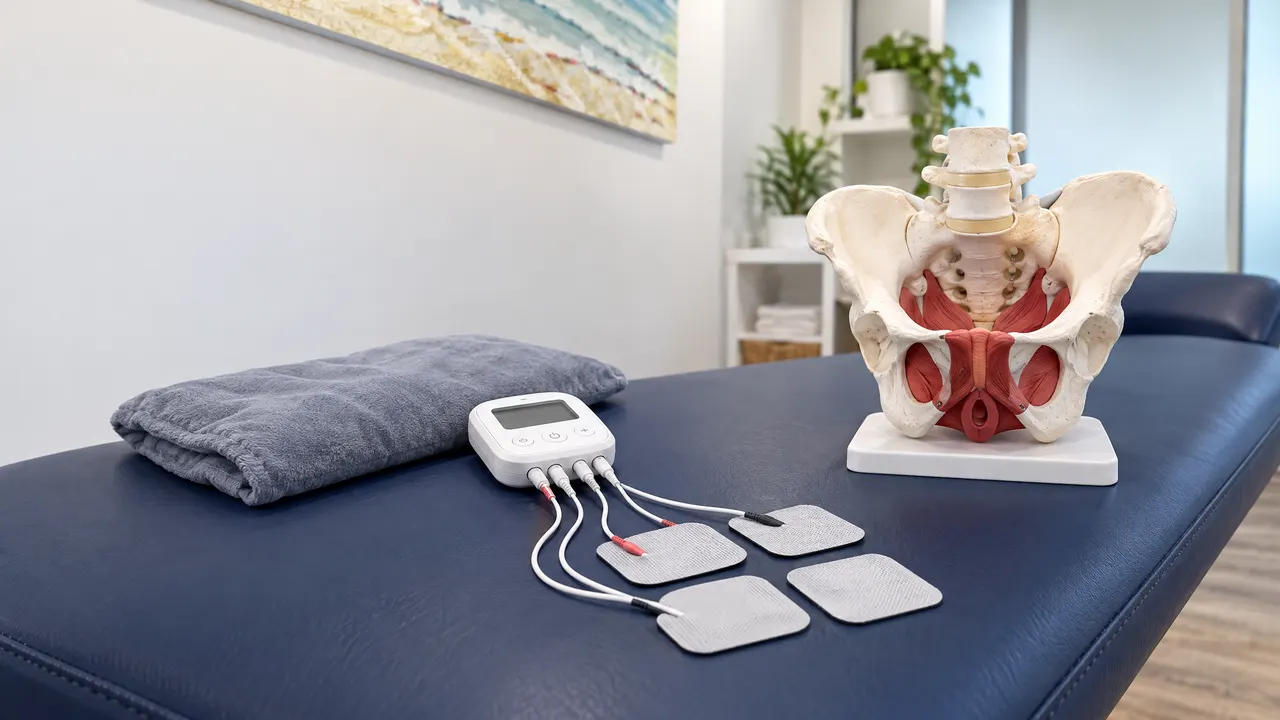
Women's health physiotherapy covers the musculoskeletal and pelvic changes that come with pregnancy, birth, postnatal recovery and later hormonal change: the back, pelvis, hips and abdominal wall under a load they haven't carried before, and the pelvic floor underneath all of it.
Your pelvic floor sits at the base of the pelvis and supports your bladder, uterus and bowel1. When it isn't doing its job well, the signs show up in fairly specific ways: needing the toilet more often or leaking urine, constipation or trouble controlling bowel motions, or a sense of pressure or a bulge1. Those are the three groups worth paying attention to.
What we do here, stated plainly. At Well Motion, this service covers the musculoskeletal side of that picture: assessment and treatment of pregnancy-related back, pelvic and hip pain, postnatal recovery of strength and load tolerance, the abdominal wall, returning to running and lifting, and practical guidance on pelvic floor exercise as part of that.
And what it doesn't. Pelvic floor muscle function itself is usually assessed by an internal vaginal or rectal examination, carried out by a health professional trained specifically for it, and your consent is required before it happens1. If that's the assessment you need, we'll tell you so and help you get to someone who does it, rather than working around the edges of it. That's a better outcome for you than a vague plan.
When it's worth getting checked
There's rarely one moment that sends someone in. Most women arrive having managed something quietly for months. The things worth an assessment1:
- You leak urine when you cough, sneeze, laugh, lift or run: any amount, at any point after birth or through menopause.
- You're needing the toilet more often or more urgently than you used to.
- You're constipated, straining regularly, or having trouble controlling bowel motions.
- You feel pressure, heaviness, or a bulge, especially by the end of the day or after being on your feet.
- Back, pelvic or hip pain through pregnancy, or pain that hasn't settled since the birth.
- You want to get back to running, lifting or your sport and don't know whether it's safe yet, or where to start.
If you've recently given birth, gentle pelvic floor exercises may be able to start from 48 hours afterwards. Check with your doctor or midwife first1. And the first year is the period in which function most often recovers with the right advice and regular exercise1, which is the practical reason not to wait until things have "settled" on their own.
What an appointment looks like
Most of a first appointment is talking and listening. What you've noticed, when it started, what it stops you doing, and what you want to get back to, whether that's netball, a shift on your feet, or picking up a toddler without bracing for it.
Then we assess how you move and how you load: your back, pelvis and hips, your abdominal wall, your breathing, and how all of that behaves under the things that currently bother you. If an internal pelvic floor assessment is what your situation calls for, we'll say so at that point and be clear about where to go for it, with your consent required for any such examination, always1.
From there you get a plain-English explanation of what we've found and what we'd suggest doing about it. If that's a course of treatment, we'll say roughly how many sessions we'd expect and what progress should look like. If it's a few exercises and a review in six weeks, we'll say that instead. An assessment isn't a commitment to a treatment plan.
You set the pace of the conversation, and you can bring someone with you or ask for anything to be explained again. None of this is a topic you should have to be brave about.
Built around the year you're having
A plan that ignores your life doesn't get done. A few things we work around rather than against:
You are probably not sleeping. A postnatal program that assumes forty spare minutes a day isn't a program, it's homework you'll abandon by week two. Three things you'll do beat twelve you won't.
The baby comes to the appointment. That's expected, not a problem to apologise for.
Recovery is measured in load, not weeks. "Six weeks postnatal" is a date, not a clearance to run. What matters is what your body currently tolerates and how we step it up, which is something we can test, not guess.
This isn't only a postnatal service. The same muscles are affected by constipation and straining, by long hours sitting, and by the hormonal changes of menopause1. Plenty of the women we see haven't been pregnant in a decade, or at all.
Nothing is discussed in a corridor. Everything here happens in a private treatment room, and what you tell us stays in your file.
Where you'll see us
Appointments run from our Engadine, Mount Annan, Narellan and Appin clinics, covering the Sutherland Shire, Macarthur and Wollondilly. You can see everything else we offer on the services page.
FAQs
Does Medicare cover pelvic physio?
Not as a standalone item: there's no specific Medicare item for pelvic or women's health physiotherapy. The pathway runs through your GP. Under a GP chronic condition management plan you may be eligible for up to 5 individual allied health services in a calendar year, and physiotherapists are on the list of eligible providers2. It's a rebate rather than free care: Medicare pays a benefit, and whether there's a gap depends on how the provider bills. Your referral lasts for the timeframe your GP states, or 18 months from the first service if no timeframe is given, and the physiotherapist has to send a written report back to your GP after the first and last visit2. If you already had a GP Management Plan or Team Care Arrangement in place before 1 July 2025, you can keep using it until 30 June 20272.
Can I get 5 free physiotherapy sessions in Australia?
Not free, but subsidised, and it's worth knowing the difference before you book. The entitlement is up to 5 individual allied health services per calendar year under a GP Chronic Condition Management Plan, and up to 10 for Aboriginal and Torres Strait Islander patients2. Medicare pays a benefit toward each service; whether you pay anything on top depends on the provider's billing. Ask us when you book and we'll tell you exactly what you'd pay with a plan in hand, and you don't need one at all to see us privately.
How much does a physiotherapy session cost in Sydney?
It depends on whether it's an initial assessment or a follow-up, so the best thing is to ask when you book rather than work from a number you found online. Two funding routes are worth checking first: a GP Chronic Condition Management Plan, which can subsidise up to 5 allied health services a year2, and your private health extras cover, which depends on your policy and level of cover.

References
- Pelvic floor exercises. healthdirect Australia, last reviewed April 2025. https://www.healthdirect.gov.au/pelvic-floor-exercises
- Services available under a GP chronic condition management plan. Services Australia, last updated 30 June 2026. https://www.servicesaustralia.gov.au/services-available-under-gp-chronic-condition-management-plan