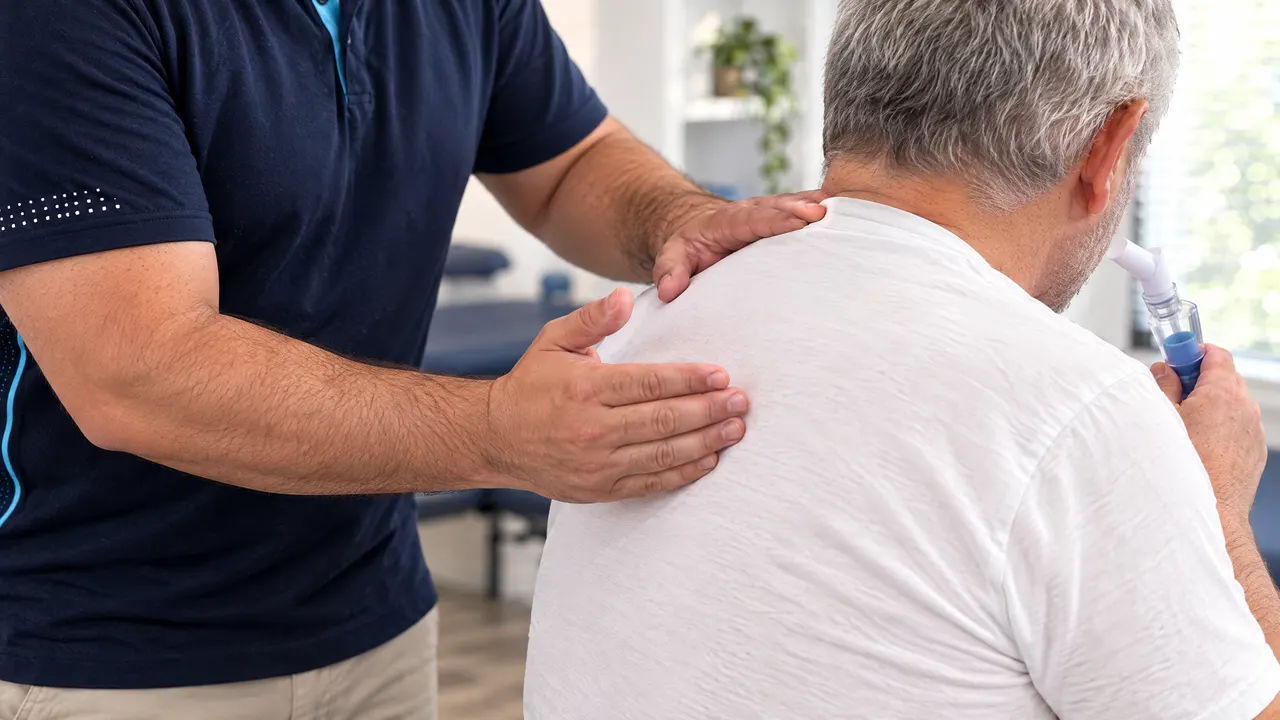
Chest Physiotherapy
If clearing your chest has become part of your morning (coughing for ten or fifteen minutes before you feel like you can properly breathe, or finding that a chest infection takes longer to shake than it used to), that's the kind of thing chest physiotherapy is for. It isn't a treatment you come in for once and tick off. It's a set of techniques you learn properly, then use at home, most days, as part of managing what's going on in your lungs. You learn them at a Well Motion clinic on Sydney's southern or south-western edge, and come back for check-ups.
You might also see it called respiratory physiotherapy. Same thing.
What chest physiotherapy is
Chest physiotherapy is hands-on, movement-based treatment aimed at the mechanics of breathing and at shifting the mucus (sputum) that can sit in the airways when the lungs aren't clearing themselves properly.
In bronchiectasis, for example, a physiotherapist may prescribe a daily program to help clear the airways of sputum, which can include physical exercises, breathing exercises, coughing exercises, and moving into positions that make it easier for sputum to drain1. A physiotherapist teaches those techniques rather than handing over a sheet and hoping for the best2.
Some people are also recommended a small hand-held device they breathe into, which uses vibration to help loosen what's sitting in the chest2. Whether that suits you is something to work through with us and your treating doctor; it isn't a default part of every plan.
Why it's a program, not a one-off session
Be clear on this before you book. The evidence doesn't describe chest physiotherapy as a one-off treatment. It describes a routine. You'll usually need to do these exercises every day2, and the airway-clearance program a physiotherapist prescribes is a daily one1.
So here's what you're signing up for. You come in, we assess how your breathing and clearance are working, you learn the techniques properly with someone watching and correcting, and then you do them at home. You come back so we can check the technique hasn't drifted, see whether it's helping, and change it when your situation changes.
The goals are treating infections and reducing flare-ups, easing symptoms, protecting your quality of life, and preventing further damage to the lungs1.
Some people are also offered pulmonary rehabilitation: a structured course led by a physiotherapist for people whose breathlessness is limiting them2. If that's the right pathway for you, it's worth raising with your GP or respiratory specialist alongside anything we do.
What an appointment looks like
You won't be talked at for forty minutes. A first session is mostly assessment and conversation: what your breathing is like across a normal day, what your cough is doing, when it's worst, what you've already been told to try, and what's getting in the way of your day, whether that's sleep, work, stairs or getting out of the house.
From there we'd look at how you're breathing and clearing, then teach the techniques that fit your situation, in the positions that work for you at home rather than the ones that only work on a treatment plinth. You'd leave knowing what to do, how often, and what "this is working" should look like in a couple of weeks.
Every Well Motion appointment follows the same four-part standard: whole-person assessment, hands-on treatment when it's warranted and not by default, evidence-informed care, and honest education you can use. You can read The Whole-Person Approach and the full breakdown of what to expect on our About page.
Built around your routine, not just your lungs
A clearance routine only works if it fits into your life. A program that takes forty minutes and has to happen at 6am is a program most people quietly stop doing by the third week, and an abandoned routine helps nobody.
So the plan gets built around your day as it is. When your chest is worst, when you've got time, what you can realistically manage on a bad morning versus a good one, and what to do when you're away from home or coming off the back of a chest infection. If you live with a partner or carer who helps, we'd rather teach both of you than assume you'll pass it on.
That's the same whole-person approach we take everywhere else in the clinic. See Physiotherapy for the broader picture, or browse all our services.
When it's not a physiotherapy problem
Chest physiotherapy is about breathing and airway clearance. If your problem is pain in the chest wall or ribs (sore to press on, worse when you twist or reach, often after a knock or a bout of heavy coughing), that's a musculoskeletal problem and it's treated differently. Start with Physiotherapy instead.
New, sudden or unexplained chest pain is more serious again. It isn't something to book a physiotherapy appointment for. See your doctor, and if it's severe, if you're struggling to breathe, or if it comes with sweating or pain spreading into your arm or jaw, call 000.
Conditions we treat
FAQs
What does a chest physiotherapist do?
They assess how your breathing and airway clearance are working, then teach and prescribe a program to help clear sputum from your airways: typically breathing exercises, coughing techniques, positions that help sputum drain, and physical exercise1,2. The teaching is the point: most of the work happens at home, between appointments.
When should chest physiotherapy be done?
Usually daily. Airway-clearance programs are prescribed as daily routines, and the exercises are normally something you'll need to do every day, not only when you feel blocked up1,2. The specific timing that works best (morning, evening, before or after other medication) is worth setting with your physiotherapist and your treating doctor together.
What are the two main types of chest physiotherapy?
There's no single agreed textbook split we'd want to quote you. The practical division most people find useful is between techniques you do with your own breath and cough (breathing exercises, coughing techniques, positioning to help sputum drain1) and techniques that use something external, like positioning assistance or a hand-held device you breathe into that uses vibration to help clear the chest2.
What are the indications of chest physiotherapy?
The usual reason is sputum that isn't clearing on its own: a chest that sounds or feels wet, a cough that's productive but not effective, or breathlessness that's limiting what you can do in a day. In bronchiectasis specifically, a daily physiotherapist-prescribed clearance program is part of standard management1. Your GP or respiratory specialist may also refer you.
Who performs chest physiotherapy?
A physiotherapist, specifically one working in respiratory care, who will teach you the breathing techniques for clearing mucus from your lungs and airways2. When you book with us, we'll tell you who you'll be seeing and what their background is, rather than leaving you to find out on the day.
What kind of physiotherapy can help with chest pain?
It depends on what kind of chest pain it is. Chest physiotherapy treats breathing and airway clearance, not pain. Pain in the chest wall, ribs or upper back is musculoskeletal and belongs with general Physiotherapy. New or unexplained chest pain should be assessed by a doctor first. See the section above.

References
- Bronchiectasis. healthdirect Australia. https://www.healthdirect.gov.au/bronchiectasis
- Bronchiectasis: Treatment. NHS. https://www.nhs.uk/conditions/bronchiectasis/treatment/