Engadine
996 Old Princes Hwy, Engadine NSW 2233
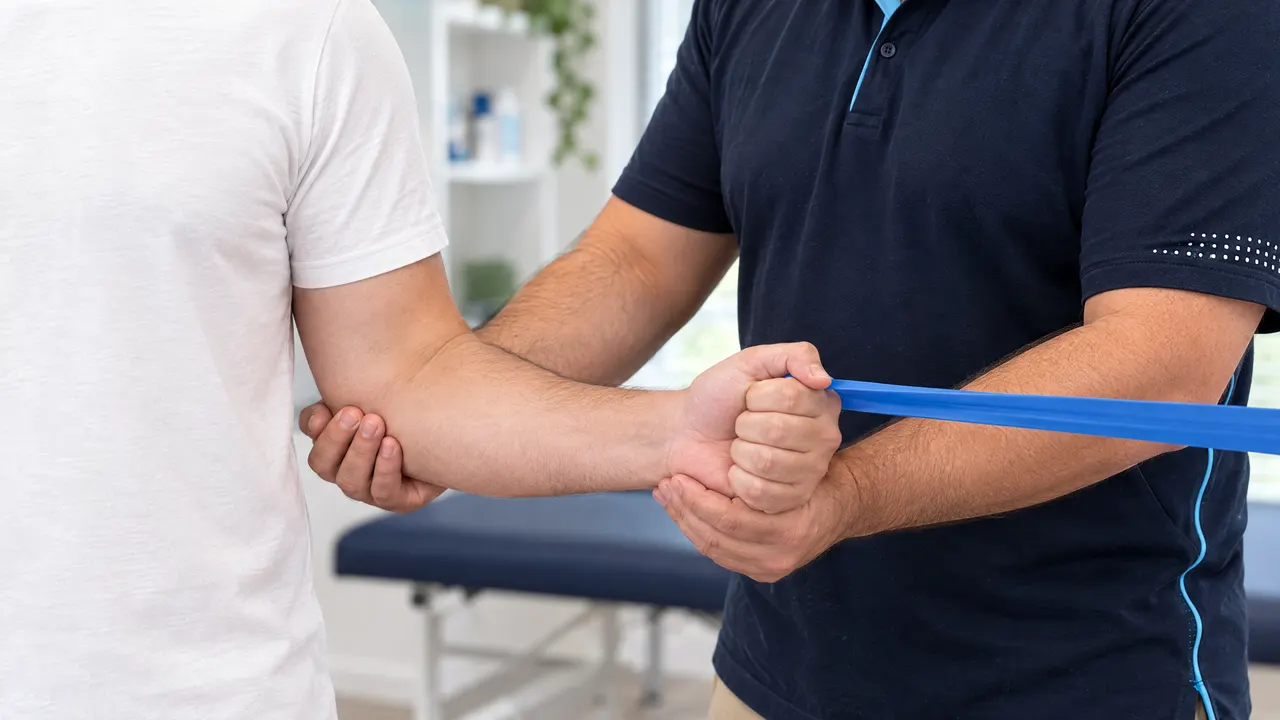
You did your back on a Tuesday, lifting something you've lifted a thousand times before. Or your shoulder gave out in the third quarter and it's been grumbling ever since. You got it looked at, the pain settled down, and you went back to work, and a few months later it went again.
That's the pattern we see most often. Not a freak accident, but a body doing the same demanding job week after week without the capacity to keep up with it. Exercise prescription is how we fix that part. It's a program of loading and movement built for you, around what your body has to do (on site, on the weekend, at home), not a printed sheet of generic gym exercises. You can start exercise prescription at any of our four clinics, in the Sutherland Shire and across Sydney's south-west.
It's a clinical term, so here's the plain version: prescribing exercise the way a doctor prescribes medication. A specific thing, at a specific dose, for a specific reason, reviewed and changed as you respond to it.
The opposite of that is what most people have been handed at some point: a photocopied sheet of four stretches, the same four everyone with a sore back gets, with no instruction on how heavy, how often, or when to progress. That isn't a prescription. It's a pamphlet.
What makes it a prescription is that the exercises are chosen from what your assessment found, the dose is set to what you can currently handle, and it changes as you get stronger.
This is the part that gets skipped, and it's the reason the same injury keeps coming back.
Most of the injuries we see in tradies and weekend athletes aren't caused by one bad movement. They happen when the demand on a body part has been sitting slightly above what that body part can comfortably handle, week after week, until the tissue finally complains. The moment it let go gets remembered as the cause, but it's usually just the day the maths caught up.
Treating the sore bit calms things down. It doesn't change the maths. If you go back to the same workload with the same capacity, you get the same result, which is why "it felt better, then it came back" is such a common story.
So the first question we ask isn't only where it hurts. It's what your week looks like. How many hours overhead. How much of the day on your knees. Whether you're lifting alone or with a hand. What you play, how often, and how hard you go when you do. That's what the program gets designed from, and it's different for a roof plumber, a sparky and a Saturday touch footballer, even when the injury on the referral looks identical.
We assess first. We'll talk through the history (what happened, what's happened since, what makes it better and worse), and then we'll look at how the area moves and loads. That usually means testing strength and control under some real resistance, not just checking range of motion. We're trying to find the gap between what your body can currently do and what your week asks of it.
We work out what the gap is. Sometimes it's strength in one specific direction. Sometimes it's endurance: the tissue is strong enough for one lift and nowhere near ready for four hours of them. Sometimes it's control at the end of a long day when you're tired. These need different programs, and guessing between them is how people end up doing the wrong work diligently for months.
You leave with the actual program, and you've done it in front of us. Not emailed later, not described. We'll take you through each exercise in the session so you know what it should feel like, what it shouldn't, and how to tell the difference. You'll know the load, the number of sets, how often, and what "this is meant to be hard" feels like versus "stop".
We review and change it. A program that stays the same for six weeks has stopped being a prescription. We'll check what's shifted, what hasn't, and adjust, and if something isn't working we'd rather tell you that early and change tack than have you keep at it out of politeness.
The point of the program isn't to make you good at the exercises. It's to make you capable of the thing you have to do.
That changes what goes in it. If your job is overhead work, the program needs to build tolerance for your arm being above your head for hours, not just a strong shoulder for ten reps. If you're kneeling on a slab all day, your knees need capacity for sustained load, not a single deep squat. If you're a weekend athlete, the hard part is usually that five days of nothing followed by ninety minutes of everything is a spike your body hasn't been prepared for.
It also changes where you do it. A gym is useful when you've got one and you'll actually go. But plenty of the programs we write use a backpack, a step, a doorway and the floor, because the best program is the one that gets done, and a plan that depends on a 6am gym visit you were never going to make is a plan that fails quietly.
Where it's relevant, exercise prescription also sits alongside the rest of your treatment. It doesn't replace it. For something like a rotator cuff tear, hands-on work and loading work do different jobs at different stages: one helps the area tolerate movement now, the other rebuilds what it can hold up to later. You can see the full range of what we offer on our services page.
Exercise prescription and conditioning is available with our physiotherapists at all four clinics:
996 Old Princes Hwy, Engadine NSW 2233
Shop 11/13 Main St, Mount Annan NSW 2567
22 Sharman Cl, Harrington Park NSW 2567
49 Appin Rd, Appin NSW 2560
All four clinics are reachable on (02) 8111 5633.
It means a set of specific exercises chosen for you after an assessment, at a set dose (how heavy, how many, how often), and reviewed as you improve. The word "prescription" matters there: it's the difference between being given exercises and being given your exercises. A generic handout isn't a prescription, no matter how good the exercises on it are.
It comes down to a handful of decisions we make from your assessment: which exercises, how heavy each one is, how many you do, how often you do them, and how much you're doing across the week all up. Those get set to what you can currently handle (challenging enough to change something, light enough that you can still work on Monday), and then moved up as you respond. If we've got it right, it should feel like real effort without leaving you unable to do your job the next day.
No, they're two different professions, and it's a fair thing to be unclear on. An Accredited Exercise Physiologist is a separate profession with its own accreditation through ESSA. A physiotherapist assesses and treats the injury itself, and prescribes loading as part of that treatment. So if what you want is the injury diagnosed and managed, with the exercise built into that plan, that's physiotherapy. Both professions prescribe exercise; the difference is the scope around it.
Exercise prescription is delivered inside a standard physiotherapy appointment, so whatever applies to your physiotherapy applies to it; there's no separate fee for the program. Depending on your situation that might mean private health extras, a referral from your GP under a chronic condition management plan, NDIS funding, or a WorkCover claim if the injury happened at work. We won't guess at what you're eligible for. Give us a call and we'll walk you through what applies to you before you book.

How would you like to reach us?
Message us on WhatsAppFor bookings and enquiries. Please don't send medical details. Call (02) 8111 5633Request a call-back
Request sent
Thank you. We'll call you back on the number you gave us.
This is a preview, so nothing was actually sent.