What taping does, and what it doesn't
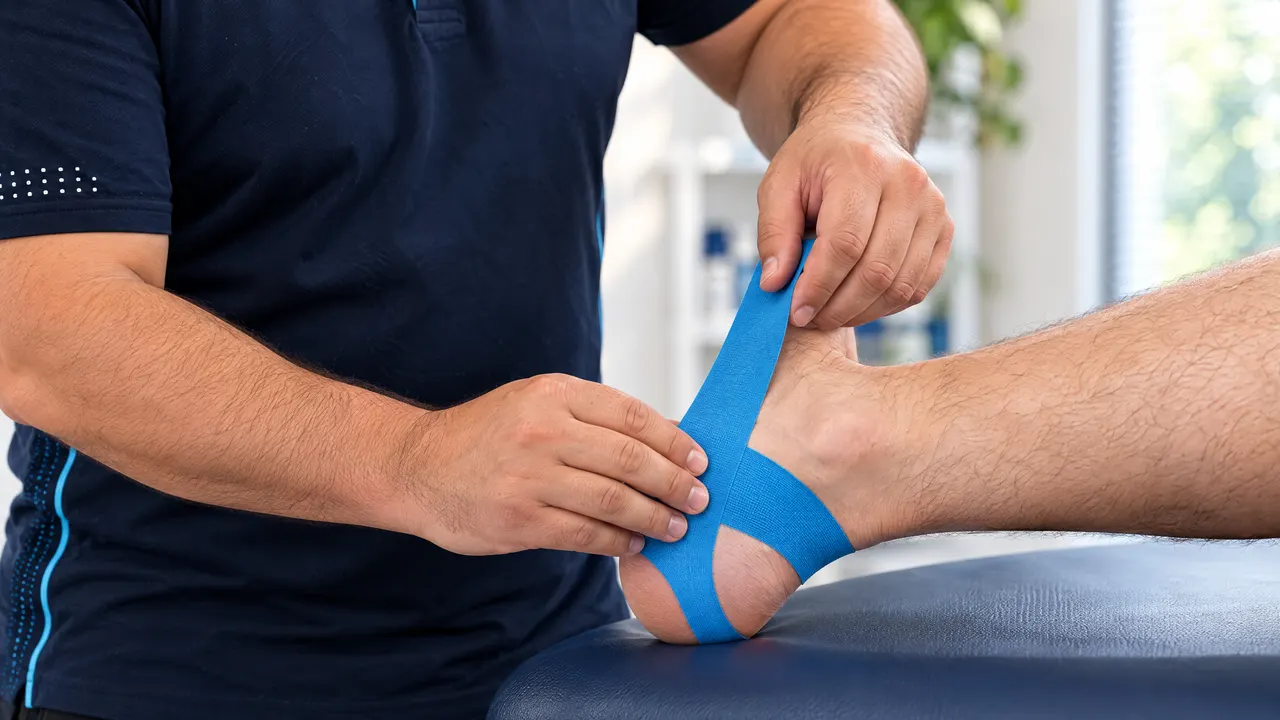
Tape changes how a joint moves and how it feels to move. Depending on the type and how it's applied, it can limit a range of motion you're trying to protect, offload a structure that's irritated, or give you more feedback about where your limb is in space.
The research supports a real but specific role. In elite sport, taping and bracing have good evidence for reducing the risk of a recurrent ankle sprain, but not for preventing a first one1. That distinction is the single most useful thing to understand about tape. If you've already hurt something and you're working your way back, tape has a job. If you're uninjured and hoping tape will stop something happening, the evidence isn't there.
A review pooling eight studies and 270 athletes with ongoing ankle instability found elastic taping produced what the authors called a moderate stabilising effect: measurable changes in walking pattern, in how far the ankle rolled in and out, and in postural sway2. What the review did not report was a clear effect on dynamic balance, landing or agility. So the fair reading is that tape appears to steady an unstable ankle, not that it transforms how you move under pressure. We'd rather tell you that plainly than let you assume tape does more than it does.
Taping has also shown value as an add-on rather than a substitute. In a trial of 69 people with plantar fasciitis, everyone received conservative physiotherapy and two of the three groups also received taping3. Both taped groups did better than physiotherapy alone on pain and on foot pressure. Tape improved on the treatment; it didn't replace it. The same trial compared two taping methods against each other, and dynamic taping came out ahead of kinesiology taping on foot function and balance scores, while the two were comparable for pain. So "taping" isn't one single thing with one single result.