Musculoskeletal conditions
back and neck pain, shoulder, knee and hip pain, arthritis, sprains and strains, and sports injuries. This is the largest category of what we treat day to day.
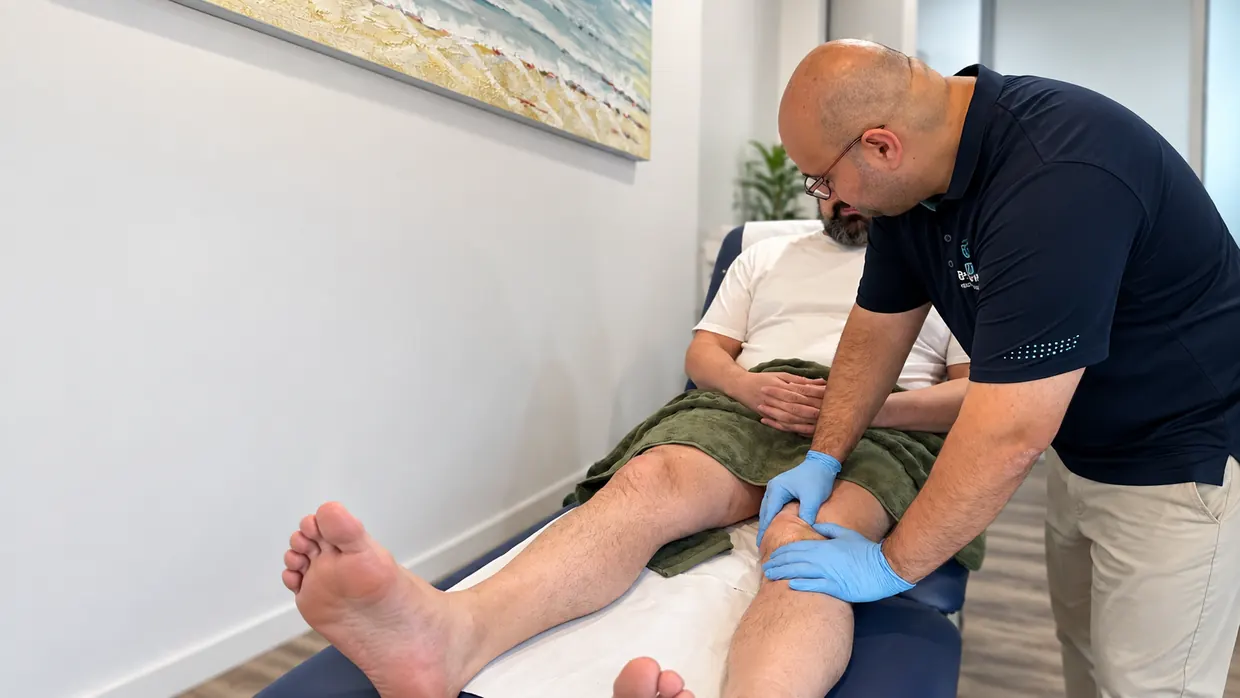
Maybe it's a back that's ached on and off for years, a knee that's never felt quite right since an old sports injury, or something new and sudden that's stopped you doing the things you'd normally do without thinking twice. Whatever's brought you here, the way we start is the same: a real conversation about what's actually going on and why it hasn't improved, before we recommend a single exercise. Well Motion offers physiotherapy at four Sydney clinics, none of them in the city: Engadine in the Sutherland Shire, Mount Annan and Narellan in Macarthur, and Appin in Wollondilly.
Physiotherapy uses hands-on treatment, movement, and exercise to reduce pain, restore function, and help your body do what it needs to do, whether that's walking without pain, getting back to sport, or recovering well after surgery1. In practice, that covers a wide range of what people come to see us for:
back and neck pain, shoulder, knee and hip pain, arthritis, sprains and strains, and sports injuries. This is the largest category of what we treat day to day.
rebuilding strength, movement and confidence after an operation, with a plan that matches where you actually are in recovery. See our Post-Surgical Rehabilitation page for more.
from a first-time strain to a returning niggle that keeps flaring up under load. See Sports Physiotherapy.
including stroke recovery and conditions like Parkinson's disease and multiple sclerosis1, where physiotherapy focuses on movement, function and independence. See Neurological Physiotherapy.
If your situation involves an NDIS plan, a WorkCover claim, or a CTP (motor vehicle accident) claim, those pathways have their own specific processes worth knowing about: see NDIS Physiotherapy and WorkCover & CTP Physiotherapy.
This is the everyday work of physiotherapy, and it covers more ground than people often expect walking in:
whether it's come on gradually or flared up suddenly, we look at what's actually driving it (movement patterns, load, posture under sustained positions) rather than just treating the sore spot in isolation.
from wear-and-tear changes like osteoarthritis through to tendon and ligament injuries, where restoring pain-free movement and strength is the goal.
including common presentations like ankle sprains, the most common acute injuries we see, and usually the most straightforward to treat well when they're managed properly from the start rather than left to settle on their own.
physiotherapy can't reverse joint changes, but it genuinely helps manage pain and keep you moving well within what your joints can currently do.
You won't be handed a generic exercise sheet and sent on your way. Every appointment begins with listening, a real assessment of the movements and tasks that matter to you, a clear explanation of what we find, and a personalised plan, not a template pulled off a shelf. See the full 7-step breakdown of what to expect on our About page, and how treatment moves through Reset, Rebuild and Return.
Every Well Motion appointment follows the same four-part standard:
See The Whole-Person Approach in full on our About page.
Across our Engadine, Mount Annan, Narellan and Appin clinics, that's the same standard of care regardless of which one you visit.
No, you can book directly with us without seeing a GP first1. A referral matters if you're claiming through workers compensation, CTP, DVA or Medicare. Medicare is the one most people ask about. If your GP puts together a GP chronic condition management plan (previously called a Chronic Disease Management Plan), available if you have a chronic or long-term condition that's been present, or is likely to be present, for 6 months or more2, that referral can unlock Medicare-subsidised allied health sessions. Under that plan, eligible patients can access up to 5 individual allied health services per calendar year, which can go entirely toward physiotherapy or be split across different allied health services3. Medicare's rebate doesn't cover the full cost of a session, so there's usually still a gap fee1: worth asking us or your GP about what that looks like for your situation. What to bring, what to wear and how long a session runs are on our FAQs page.
Most pain and injury physiotherapy treats is mechanical: it responds to movement, load management and the right hands-on treatment. Occasionally, though, symptoms point to something that needs medical attention before physiotherapy treatment starts. In the profession, these are called red flags: signs or symptoms that may indicate a more serious underlying issue, rather than a typical musculoskeletal problem4. Spotting them (and knowing when to refer you back to your GP or for urgent care instead of treating through them) is a core part of what a properly assessed first appointment is for, not an extra precaution bolted on afterwards.
It varies by clinic and by what your appointment involves: an initial consultation is usually priced differently to a follow-up session. The clearest way to know what your visit will cost is to check when you book, since we'd rather be upfront about it than have you guessing.
No, you can book with us directly. Physiotherapists are primary allied health professionals, so there's no GP paperwork needed to get started as a private patient. A referral only matters if you're claiming through workers compensation, CTP, DVA or Medicare. Each of those pathways needs one before we can treat you under it.
Only in specific circumstances: you'll need a referral and a GP chronic condition management plan from your GP, and Medicare's rebate won't cover the full session cost even then1. Private health insurance may cover physiotherapy separately, depending on your policy and level of cover.
"Free" isn't quite accurate. If your GP assesses you as eligible for a GP chronic condition management plan, that can unlock up to 5 Medicare-subsidised allied health sessions per calendar year. The plan is for a condition that's chronic or long-term, generally 6 months or more. You can put all 5 sessions toward physiotherapy2,3. There's still usually a gap fee, since the Medicare rebate doesn't cover the full session cost.
It's a sign or symptom that suggests something more serious might be going on than a typical musculoskeletal problem: the kind of thing that needs medical attention rather than, or before, physiotherapy treatment4. Part of a proper physiotherapy assessment is actively screening for these, so if something doesn't fit the usual picture, you get referred on rather than treated through it.

How would you like to reach us?
Message us on WhatsAppFor bookings and enquiries. Please don't send medical details. Call (02) 8111 5633Request a call-back
Request sent
Thank you. We'll call you back on the number you gave us.
This is a preview, so nothing was actually sent.