Conditions We Treat
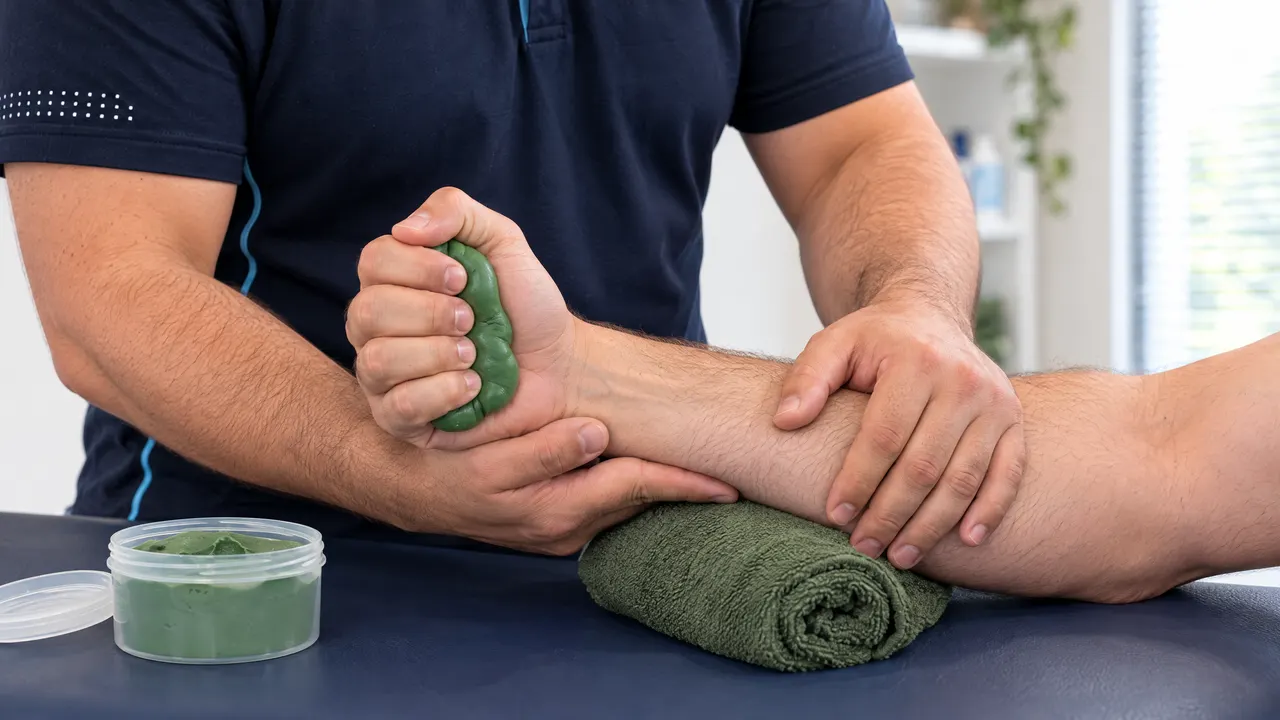
Hand Rehabilitation
5.0 average rating on Google
Registered NDIS Provider
SIRA Registered Provider
A hand injury rarely announces itself all at once. It shows up when you go to do up a shirt button and your fingers won't cooperate, when a coffee cup feels heavier on one side than it should, or when you reach for a drill you've picked up ten thousand times and your grip just isn't there.
Hands are how you do almost everything. So when one stops working properly, the problem isn't really the wrist or the finger; it's the list of ordinary things you've quietly stopped being able to do. That list is where we start. Hand rehabilitation is on offer at one clinic in the Sutherland Shire, two in Macarthur and one in Wollondilly, all in Sydney's suburban south and south-west.
The two things a hand injury takes away
Almost every hand and wrist rehabilitation program is rebuilding some combination of these two capabilities. They're related, but they're not the same thing, and progress in one doesn't automatically bring the other with it.
Fine motor control is precision: the small, coordinated movements that let you pick up a coin, type accurately, fasten a button, or handle a fork. It depends on the small muscles of the hand, joint mobility in the fingers and thumb, and the sensory feedback that tells your brain where your fingers are and how hard they're pressing. Pain, stiffness, swelling and a period of immobilisation all interfere with it, and it's usually the capability people notice missing first, because it's involved in so many small daily tasks.
Grip strength is force: holding, carrying, squeezing, twisting. It draws on the larger forearm muscles as well as the hand itself, which is why wrist and forearm problems so often show up as a grip complaint. It's also the one that tends to fade quietly during a period of rest or splinting, and the one that decides whether you can carry shopping, hold a steering wheel for a long drive, or manage a full shift with a tool in your hand.
A useful program addresses both, in the right order, at the right time. Loading a grip too early after a fracture is a problem; leaving precision work until the very end, when you've spent weeks not using your fingers normally, is a different problem. Working out that sequencing for your specific situation is a large part of what the assessment is for.
Built around what you need to get back to
This is the part we do differently, and it's deliberate. "Getting your hand working again" isn't a goal you can measure or a program you can write. "Being able to hold a hammer through a full day's work without your wrist giving out" is.
So before we build anything, we get specific about the destination:
- Work. A carpenter, a hairdresser, a nurse, a chef and someone at a keyboard all need very different things from the same hand. The tasks you repeat all day, the tools you hold, the positions you hold them in, and how long your shift runs all shape what we train and how we load it.
- Sport. Gripping a bat, taking a ball, bearing weight through a wrist in the gym, holding a racquet through contact: each of these is a specific demand with a specific tolerance to rebuild. Returning to training isn't the same milestone as returning to competition, and we plan for both.
- Daily life. Sometimes the goal is being able to open a jar, do up your own buttons, carry a grandchild, or drive without your hand aching afterwards. These aren't lesser goals, and they get the same structure and the same progression.
We'll agree on a small number of real, checkable targets like these at the start, and your program gets built to reach them. It also means you can tell whether it's working, not by whether the exercises feel easier, but by whether the thing you came in unable to do is coming back.
How We Work
What an appointment looks like
Every Well Motion appointment starts the same way:
assessing the movements and tasks that matter to you
explaining plainly what we've found
and building a personalised plan from there
You can read the full step-by-step breakdown of what to expect on our About page.
For a hand or wrist specifically, expect the assessment to be hands-on and fairly detailed. We'll look at movement and stiffness across the wrist, thumb and individual fingers, test grip and pinch, check for nerve involvement where your symptoms suggest it, and watch you attempt the task you're struggling with, so we're not only testing movements in isolation. You'll usually leave the first appointment with a clear explanation of what's going on, a small set of exercises you understand the point of, and guidance on what to do and avoid in the meantime.
Hand and wrist problems we work with
If you already know what you're dealing with, these pages go into the detail:
Carpal tunnel syndrome
compression of the median nerve at the wrist, typically felt as numbness, tingling or weakness in the hand.
TFCC injury
pain on the little-finger side of the wrist, often aggravated by twisting or pushing through the hand.
Scaphoid fracture
one of the most commonly missed wrist fractures after a fall onto an outstretched hand. If you've had a fall and your wrist is still painful, this one needs proper imaging rather than waiting it out; our Fracture Clinic covers that pathway.
Repetitive strain injury of the wrist
pain that builds up over time through sustained or repeated loading, very often work-related.
Wrist sprain
ligament injury from a fall or awkward load.
Not sure which one fits? Start at the hand and wrist region in our Injury Finder, or just book an assessment and let us work it out with you.
How hand rehabilitation fits with your other care
Hand rehabilitation rarely happens on its own. Depending on your situation, your program may include manual therapy for stiffness through the wrist and hand joints, and it may sit alongside post-surgical rehabilitation if you're recovering from an operation, working to the timeframes your surgeon has set rather than against them. If your injury is work-related (which wrist and hand overuse injuries very often are), WorkCover & CTP Physiotherapy explains how that process works.
We'll also tell you when we're not the right next step. Some hand injuries need a surgical opinion, imaging, or a specialist hand service before rehabilitation is the useful thing to be doing. Recognising that and sending you to the right place is part of a proper assessment, not a failure of one.
FAQs
What is the difference between physiotherapy and hand therapy?
"Hand therapy" usually refers to a specialised area of practice focused on the hand, wrist and upper limb, worked in by physiotherapists and occupational therapists who have done additional training in it; in Australia, some hold formal accreditation as hand therapists. What we offer is physiotherapy-led hand and wrist rehabilitation: assessment, hands-on treatment and a structured program to rebuild movement, grip and fine motor control. For many hand and wrist problems that's exactly what's needed. For some (complex post-surgical cases, or where custom splinting is central to the treatment), a dedicated hand therapy service or a hand surgeon is the better fit, and we'll say so and point you there.
Why would someone need hand therapy?
Most often because something has changed what their hand can do. That might be an injury (a fracture, a sprain, a ligament or nerve problem), pain that's built up over time through work or repeated loading, stiffness and weakness after a period in a cast or splint, or recovery after surgery. The common thread is a gap between what your hand could do before and what it can do now.
When should you see someone about a hand or wrist injury?
Sooner is generally easier than later, particularly if the problem is affecting your work or sleep, if it isn't settling over a couple of weeks, or if it keeps coming back. Get it looked at promptly rather than waiting if you have numbness, tingling or weakness in the hand, if you can't move a finger or the wrist normally, if there's obvious deformity or significant swelling, or if the injury followed a fall onto an outstretched hand: wrist fractures after that mechanism are easy to underestimate.
How long is a hand therapy session?
Your first appointment is longer than the ones that follow, because it covers the full assessment, the explanation of what we've found, and setting up your initial program. Follow-up sessions are shorter and more focused: reviewing progress, adjusting the program, and hands-on treatment where it's warranted. We'll confirm the actual length when you book.
Is hand therapy covered by Medicare?
Only in specific circumstances. Medicare subsidises physiotherapy through a chronic condition management plan arranged by your GP, and even then it doesn't cover the full cost of a session. We explain how that works, who's eligible and what it does and doesn't cover on our Physiotherapy page. Private health insurance may cover physiotherapy separately, depending on your level of cover, and you don't need a referral to book with us either way.