Falls Prevention
You put a hand on the bench now when you turn around at the sink. You take the stairs one at a time, leading with the same foot. Getting off a low couch takes a small run-up. None of it is dramatic, and none of it has put you on the floor, but you've noticed, and you've started planning your day around it a little.
Or you're the daughter or the son reading this, because your mum brushed off a stumble in the driveway last month and you haven't stopped thinking about it since.
Either way, this is the right page. Balance and strength are things you can deliberately build, at almost any age. The hard part is that most people only find that out after a fall has already made the point for them. Falls prevention starts with an assessment in clinic and continues as practice in your own home, so we keep it local to older adults in Wollondilly, Macarthur and Sydney's Sutherland Shire.
What an appointment looks like
The first session is mostly assessment, because guessing at the cause of unsteadiness is how people end up doing the wrong exercises for six months.
We start with a conversation. What your week looks like, what has changed, what you've stopped doing, and whether there have been any near-misses. That last question matters more than a fall does. Most people have had several close calls they've never mentioned to anyone, and those are the most useful thing you can tell us.
We'll also ask about your home: steps, hallways, the bathroom, whether there's a rail anywhere, what the floors are like. Not to inspect it, but because your balance has to work in your house, not in a clinic.
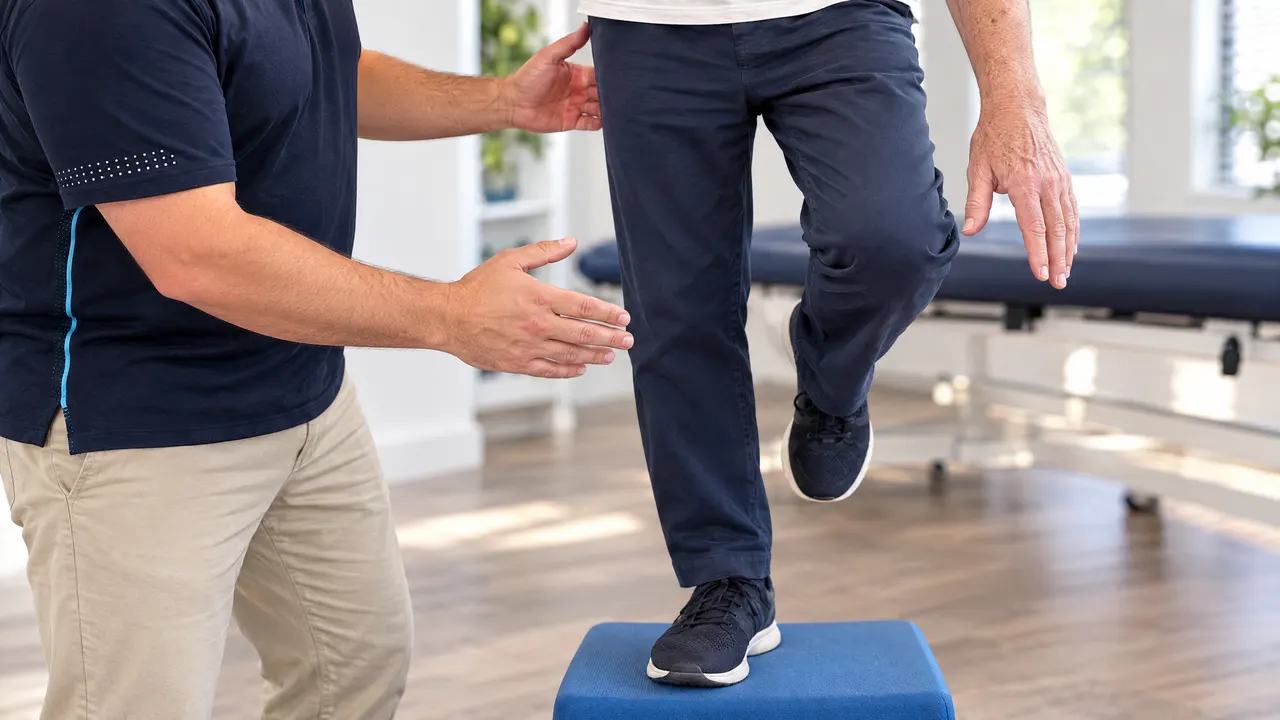
Then we look at how you move. Standing, turning, walking, getting up out of a chair, stepping over something, looking up while staying steady. We'll test strength, particularly through the legs and hips, and check your ankles and how well you can shift your weight. Some of it will feel like the sort of thing you do without thinking every day, which is the point: we need to see the real thing, not an exercise version of it.
We'll also want to know about your eyesight, your footwear, and anything that makes you feel dizzy or light-headed, because those change the picture considerably.
We tell you plainly what we found. That includes the parts that are fine, and there are usually more of those than people expect. If your balance is largely intact and the real issue is that one leg has lost strength, we'd rather say that than hand you a generic list.
If something we find looks like it needs a doctor rather than a physiotherapist (a medication review, your blood pressure, your eyes, or dizziness that doesn't fit a movement pattern), we'll tell you, and tell you what to ask for.
You leave with something specific and short. Usually two or three things to work on, written down, with how many, how often, and what it should and shouldn't feel like. Not a twenty-item programme that lives in a drawer.
Most people come back a handful of times over a few months rather than weekly. At those reviews we retest the things worth retesting, and adjust: some things get easier and come off the list, sometimes something new is worth adding. The list should get shorter and more specific over time, not longer.
Built around what you want to keep doing
"Falls prevention" sounds like a safety programme. In practice it's almost always about something much more particular, and the plan is built backwards from that.
If the goal is getting to the letterbox and back without thinking about it, the work is confidence on uneven ground, a bit more ankle strength, and practice turning. If it's staying in your own home, it's getting off a low chair, on and off the toilet, and in and out of the shower safely. If it's the garden, it's kneeling, getting back up, and carrying something while walking. If it's being able to pick up a grandchild without a second thought, that's a strength goal with a balance problem attached.
None of those get solved by the same list of exercises. Which is why we ask first.
This is also where the rest of your life matters. How well you're sleeping, how much you're moving in a normal week, what you're eating, how confident you feel going out: all of it shapes both your risk and how much you'll get out of a plan. Fear of falling is its own problem: it makes people move less, which makes them weaker, which makes a fall more likely. We treat that as part of the work, not as something separate from it.
And if you're the family member: you're welcome in the room, if the person you're bringing wants you there. You'll often have noticed things they haven't: that they've stopped going out in the evening, or that they're holding the walls. Say so. It's usually the detail that changes the plan.
If the problem is dizziness, start somewhere else
There's one distinction to make before you book, because it changes the assessment.
If your unsteadiness comes with the room spinning, a swimming feeling when you roll over in bed, or vertigo when you look up or turn your head quickly, that points towards the inner-ear balance system, not towards strength. That needs a different examination and different treatment. Start on our vestibular physiotherapy page instead.
If you're not sure which one describes you, book here anyway and say so at the start. Working out which of the two it is, or whether it's both, is part of the assessment.
What this page isn't promising you
We can't promise you'll never fall. Nobody can, and a clinic page that implies otherwise is selling you something.
What an assessment can do is give you a clear picture of where your strength, balance and confidence sit right now, an honest read on which of those are worth acting on, and a plan that fits your home and your week. That's a different claim from a guarantee, and we'd rather make the one we can stand behind.
Conditions we treat
FAQs
What sort of exercise do you recommend for older adults?
It depends on what the assessment finds, which is the whole reason we assess first. In general the work tends to combine strength (most often legs and hips) with balance that's challenged deliberately and safely, and it needs to get gradually harder over time to keep being worth doing. What that looks like for you depends on your starting point, your home, and what you're trying to be able to do. If you'd like to see the sort of thing we mean before you book, our guide to balance exercises for older adults walks through it.
Do I need a referral, or a doctor to send me?
No. You can book directly. If you do have a referral or a care plan from your GP, bring it along and we'll work with it.
Isn't some unsteadiness just part of getting older?
Some change is normal. Reaching the point where you're planning your day around it isn't, and it's usually not fixed either. Strength and balance respond to specific work well into later life. The common mistake is assuming they've gone, and stopping the very activity that would maintain them.
I'm asking on behalf of my mum. Can I come with her?
Yes, if she'd like you to. Plenty of people bring an adult child or a partner, and it often makes the appointment better: you tend to have noticed things they haven't, or haven't mentioned. It's her appointment and her decisions, but there's no rule about who is in the room.
Will I be given exercises to do at home?
Almost always, yes, and deliberately few of them. You'll see us for an hour and live in your body for the rest of the week, so what you leave with needs to be short enough to get done. If it isn't getting done, tell us and we'll change it. Three things you'll do beat ten you won't.