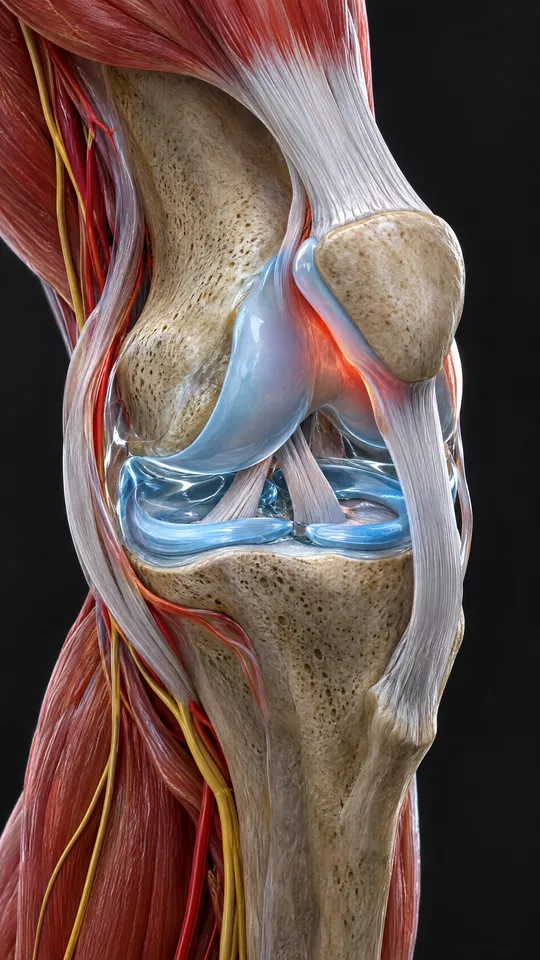
Patellofemoral pain, a meniscus tear, or osteoarthritis? How to tell the difference
Three things commonly get confused here, and they lead to different plans.
Patellofemoral pain typically affects people under 40 who are physically active, and has a lifetime prevalence of about 25% 5. The most useful single test is pain at the front of the knee during a squat, and it's worth being honest about how it performs: about 91% sensitive but only 50% specific 5. In plain terms, if squatting doesn't hurt the front of your knee, patellofemoral pain is unlikely; if it does hurt, that alone doesn't confirm it. Which is why an assessment looks at more than one thing.
A meniscus tear affects an estimated 12% of adults, and usually follows either an acute twisting injury under 40 or degenerative change over 40 5. The tests point differently too: the McMurray test runs about 61% sensitive and 84% specific, joint line tenderness about 83% and 83% 5. If your knee catches, locks, or swelled up quickly after a twist, that's a different conversation.
Knee osteoarthritis becomes the likely explanation from around 45 onwards, with activity-related pain and morning stiffness lasting under 30 minutes 5. One caution: patellofemoral arthritis is a separate diagnosis from patellofemoral pain syndrome, even though the names sit close together. If that's the term you've been given, osteoarthritis is where to read next.
And then there's runner's knee. That label gets used loosely, and sometimes it's attached to patellofemoral pain. But if your pain is on the outside of the knee, builds through a run, settles with rest and returns on the next one, that's a different pattern: ITB syndrome is where to read next. Patellofemoral pain sits at the front, around or behind the kneecap.