Need urgent care? 24/7 Mobile & After-Hours Emergency Physiotherapy Call (02) 8111 5633 For life-threatening emergencies, always call 000
Knee

Prepatellar Bursitis

5.0 average rating on Google
Registered NDIS Provider
SIRA Registered Provider

You've spent the week on your knees: laying tiles, working under a sink, weeding a garden bed. Now there's a soft, puffy swelling sitting right on top of your kneecap. It's tender, a little warm, and awkward to kneel on. There was never a moment you could point to as the injury. It just appeared.

That's prepatellar bursitis. Its old name is housemaid's knee 4, and that name tells you most of what you need to know about how people end up with it.

What's actually causing it

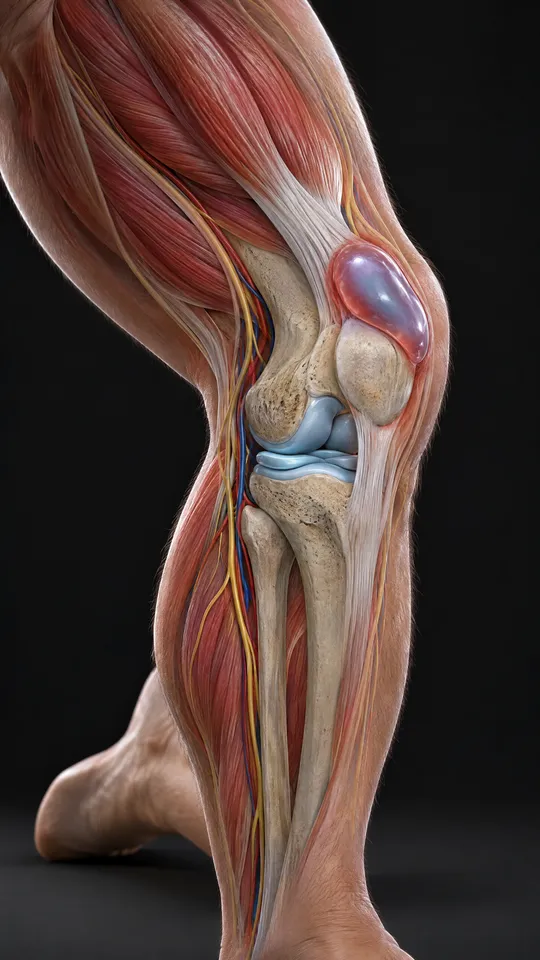
A bursa is a small, fluid-filled sac that acts as a cushion between bone and soft tissue 2. The prepatellar bursa sits between your kneecap and the skin over it. It's so close to the surface that you can see and feel it when it fills with fluid. That's why it looks alarming, and also why it's fairly easy to recognise.

The two common causes are injury and overuse 2. For this bursa, overuse nearly always means kneeling, repeatedly and for long stretches 1. Laying carpet and production-line packing are named work triggers 2, and tilers, plumbers, roofers and gardeners fall into the same pattern. Doing the same movements every day, or putting sustained stress on a joint, raises the risk 2. The other route in is a direct blow to the front of the kneecap.

Some things make it more likely. Carrying extra weight increases the risk of knee bursitis, and gout, rheumatoid arthritis and diabetes can all contribute 2.

The mechanism is simple. This isn't a fault inside the knee joint. It's a cushion at the front of the knee that's been pressed on more than it can tolerate, so what settles it is changing what presses on it.

Side of a bent knee showing a swollen fluid-filled bursa in front of the kneecap

Prepatellar bursitis or an infected bursa? How to tell the difference

This is the distinction that matters most, because the two can look alike and are treated very differently.

Bursitis here comes in two forms: septic (infected) and non-septic. Across prepatellar and olecranon bursitis together, roughly one in three cases is septic 5. That's not a rare complication.

The signs that point towards infection are specific: a fever above 37.8°C, skin over the bursa noticeably warmer than the skin around it, and cuts or breaks in that skin 5. In everyday terms, watch for a high temperature, or feeling hot, cold or shivery 3.

Confirming it is a medical job, not a physiotherapy one. A GP may draw off fluid from the bursa to test for infection and gout 1,3. Blood tests, an x-ray or an ultrasound can help rule out other causes 1,2. Septic bursitis is treated with antibiotics 5.

Swelling over the kneecap with a fever, or skin that's hot and angry, needs a GP visit the same day. Once infection is ruled out, the rest is straightforward.

If your pain sits below the kneecap rather than on top of it, with no puffy swelling, that's a different pattern. Patellar tendinopathy is the page to read next.

How it's diagnosed

This one is mostly diagnosed by looking and feeling. Bursitis is usually picked up on physical examination 6: a tender, warm swelling sitting right over the bursa 2. Your doctor will ask how long it's been there, how sore it is, and what puts you at risk of it. They'll also ask about fever or chills, because an infected bursa needs a different plan 6.

Then they'll compare the sore knee with your other one, press around it for tenderness, and see how far it bends before pain stops you 6. If an X-ray is ordered, it's to check that a fracture or another bone problem isn't behind your symptoms 6.

How we treat it

Once infection is ruled out, the evidence points one way: conservative treatment 5. Here's what that looks like with us.

1
Working out what's loading it. Which activity, how often, how long at a time, and what changed. With prepatellar bursitis this is most of the job, and it's the part most people skip.
2
Changing the kneeling load, not stopping everything. If a particular kind of overuse triggered it, avoid that activity or change how you do it 2. That means padding when you kneel, and regular breaks instead of long unbroken stretches 3. Rest means avoiding what makes the pain worse 1. Doctors describe it as relative rest 8.
3
Gentle movement, then graded loading. Gentle mobilisation exercises are part of standard treatment 2. Our exercise prescription and conditioning approach builds that up in planned steps.
4
Hands-on treatment where it helps you move comfortably and cope with that work. See manual therapy. It supports the plan; it isn't the plan.
5
Getting you back to the real thing, whether that's a trade, the garden or a sport, with kneeling rebuilt deliberately. Sports physiotherapy covers how we structure that return.

Government health guidance also lists occupational therapists alongside physiotherapists for bursitis. They can help you find ways to change the activity that caused it 1,2. If your knee problem is really a work-setup problem, that's a useful referral, and we'll tell you so.

Other treatments we may use

Early self-care.

Protection, rest, ice, compression and elevation is the standard first response 1. Use an ice pack wrapped in a tea towel for about 10 minutes at a time, repeated every few hours 3. Avoid knocking or banging the knee while it settles 3.

Padding and bracing.

Braces or splints can reduce stress on the area and support good alignment 2. That's a mechanical reason, not a proven outcome. But if you have to keep kneeling for work, good padding is often the most practical change you can make.

Pain relief medication.

Paracetamol or anti-inflammatories such as ibuprofen are commonly used for bursitis 3,5. Physiotherapists don't prescribe medication, so ask your GP or pharmacist.

Draining the bursa (aspiration).

This is a medical procedure that we don't perform. It's a standard part of managing both forms of bursitis, and it's also the test that tells them apart 5. There is a trade-off: a procedure on the joint is one of the things that raises the risk of infection afterwards 1.

Corticosteroid injection.

The evidence puts this well down the list for this bursa. A treatment pathway built from the published literature reserves it for people with confirmed non-septic bursitis and high athletic or occupational demands 5. That's a narrow group. Corticosteroid injection into a joint also raises the risk of joint infection and can, rarely, cause tendon rupture 1. And an infected bursa should never be injected with steroids 3. This is a decision for your GP or specialist, not us.

Surgery.

Cutting and draining the bursa, or removing it, is reserved for severe cases, cases that don't respond to treatment, and bursitis that is long-standing or keeps coming back 5. Even for infected bursae, the reviewed evidence did not support removing the bursa straight away 5.

Your recovery path: Reset, Rebuild, Return

Once infection has been ruled out, a swollen kneecap bursa follows The Well Motion Recovery Path™. You move up a phase when the knee tolerates more pressure, not when a week ends.

  • Reset: the first week or two. Early self-care 1, padding, and a break from the kneeling that set it off 2,3. Expect the soreness to ease before the swelling does. No better after one to two weeks, or any fever, means a GP visit 3. We move you on once daily tasks no longer make the swelling build.
  • Rebuild: gentle mobilisation first 2, then graded loading through exercise prescription and conditioning, with manual therapy where it helps. Kneeling comes back in short, padded spells. Expect some tenderness to direct pressure. We move you on when the knee does what your daily tasks ask of it.
  • Return: back to the trade, the garden or your sport. We test the kneeling your day involves. You leave with a padding and break routine, because repeated kneeling is the most common cause 8.

How long it usually takes. Bursitis in general should settle in a few weeks 3. No source we found gives a figure for this bursa alone. If it keeps coming back and a surgeon removes the bursa, the timeline is theirs: a systematic review of 10 studies reported 80% of people treated endoscopically were pain free after 1 year 9.

Reducing the risk of flare-ups

No trial has tested kneepads, or anything else, for preventing prepatellar bursitis. So these go after its known causes:

  • Pad the knee every time you kneel. Repeated kneeling on the bursa is the most common cause 8. In a survey of 3,710 French workers, cases clustered in men who knelt often and carried heavy workloads, and construction had the highest rate of any industry 7. Kneepads are the standard advice if you work on your knees or play contact sport 6.
  • Break up long stretches on your knees. Stop to stretch your legs, and swap between tasks so the pressure isn't constant 6.
  • Look after the skin over your kneecap. A scrape, puncture wound or insect bite can let bacteria into the bursa 6, so clean any cut there 3.
  • Keep to a healthy weight. Being overweight increases the risk of knee bursitis 2.

When to get it checked properly

Most bursitis can be treated at home and should settle in a few weeks 3. Get it assessed rather than carrying on alone if 3:

  • It hasn't improved, or is getting worse, after one to two weeks of treating it yourself
  • You have a high temperature, or you feel hot, cold or shivery
  • You can't move the knee
  • The pain is very severe, sharp or shooting

Act quickly on the fever and heat signs, because that could be infection and it means a GP today. The rest usually just means whatever is driving it hasn't been found yet. That's a solvable problem.

Your first appointment

We start by listening: how it began, what makes it worse, and what it's stopping you from doing. Then we examine the area, explain what we find in plain English, and agree a plan with you. Your first visit is 40 minutes at Engadine and 30 minutes at our other clinics.

We see patients at Engadine, Mount Annan, Narellan and Appin, and at home through our mobile physiotherapy service. If you have private health cover, here's how health fund rebates work for physiotherapy.

FAQs

How long does prepatellar bursitis last?

Bursitis can usually be treated at home and should go away in a few weeks 3. That figure is for bursitis in general, not this bursa specifically. None of the sources we used gives a separate timeline for the knee. The earlier checkpoint matters more: if one to two weeks of self-care hasn't helped, or it's getting worse, get it looked at 3. What usually makes it drag on is going back to the same kneeling load before the bursa has settled.

Is walking good or bad for knee bursitis?

None of the sources we used looks at walking specifically, so we won't claim it's been shown to help or harm. The guidance says to avoid activities that cause or worsen your pain 1, and that gentle mobilising exercise is part of treatment 2. With prepatellar bursitis the problem is usually kneeling and direct pressure, not walking on flat ground, so most people can keep walking. If yours clearly gets worse with it, mention that at your assessment.

What not to do when you have bursitis?

Don't knock or bang the joint 3. Don't go straight back to the activity that triggered it without changing how you do it 2. Don't stop moving the knee altogether: gentle mobilising exercise is part of treatment 2. And don't treat a hot, swollen knee with a fever as ordinary bursitis to ice at home. See a GP 3,5.

Does bursitis ever fully go away?

Usually, yes. Most cases settle within a few weeks 3. The catch is that it can come back. If the kneeling carries on unchanged, the bursa has no reason to stay settled. You can't always prevent bursitis, but you can reduce flare-ups by changing how you normally move 1. That means taking breaks during repetitive tasks, avoiding or modifying the movement that caused it, keeping to a healthy weight 1, and using padding when you kneel 3.

More Knee conditions

Knee

Meniscus Tear

Catching, locking or swelling after a twist, sometimes with a knee that won't fully straighten.

Read more
Knee

MCL Injury

The MCL runs down the inside of your knee. Most injuries happen when something hits the outside of the knee and forces it inwards; it's the ligament most commonly injured in knee trauma.

Read more
Knee

Patellar Dislocation

A patellar dislocation is the kneecap being forced out of its groove at the end of the thigh bone. It almost always goes outwards, towards the outside of the knee.

Read more
Knee

Baker's Cyst

A Baker's cyst is a build-up of fluid behind the knee, usually excess fluid from the knee joint itself.

Read more

If a puffy, tender kneecap has hung around for a couple of weeks and your work keeps you on your knees anyway, it's worth a proper look.

Book an assessment and we'll first check there's no sign of infection. Then we'll work out which part of your day is keeping it irritated. You can see us at Engadine, Mount Annan, Narellan or Appin. If something else sounds closer to your pain, head back to the Knee section of our Injury Finder.

Book an Assessment
Ahmed Elsayed, Principal Physiotherapist
Reviewed by Ahmed Elsayed Principal Physiotherapist at Well Motion

References

  1. healthdirect (Australian Government). Bursitis. Last reviewed July 2025. https://www.healthdirect.gov.au/bursitis
  2. Better Health Channel (Victorian Department of Health). Bursitis. Reviewed 11 November 2024. https://www.betterhealth.vic.gov.au/health/conditionsandtreatments/bursitis
  3. NHS. Bursitis. Last reviewed 30 October 2023. https://www.nhs.uk/conditions/bursitis/
  4. Leeds Community Healthcare NHS Trust. Pre-patella bursitis. https://leedscommunityhealthcare.nhs.uk/our-services-a-z/musculoskeletal-msk/knee-problems/known-diagnosed-knee-problems/pre-patella-bursitis/
  5. Baumbach SF, Lobo CM, Badyine I, Mutschler W, Kanz KG. Prepatellar and olecranon bursitis: literature review and development of a treatment algorithm. Archives of Orthopaedic and Trauma Surgery, 2014;134(3):359-370. PMID 24305696. Retrieved from PubMed. DOI: 10.1007/s00402-013-1882-7
  6. American Academy of Orthopaedic Surgeons. Prepatellar (Kneecap) Bursitis. OrthoInfo. https://orthoinfo.aaos.org/en/diseases--conditions/prepatellar-kneecap-bursitis/
  7. Le Manac'h AP, Ha C, Descatha A, Imbernon E, Roquelaure Y. Prevalence of knee bursitis in the workforce. Occupational Medicine, 2012;62(8):658-660. PMID 22778241. https://doi.org/10.1093/occmed/kqs113
  8. Khodaee M. Common Superficial Bursitis. American Family Physician, 2017;95(4):224-231. PMID 28290630. https://pubmed.ncbi.nlm.nih.gov/28290630/
  9. Brown OS, Smith TO, Parsons T, Benjamin M, Hing CB. Management of septic and aseptic prepatellar bursitis: a systematic review. Archives of Orthopaedic and Trauma Surgery, 2021;142(10):2445-2457. PMID 33721054. Retrieved from PubMed. DOI: 10.1007/s00402-021-03853-9