What's actually causing it
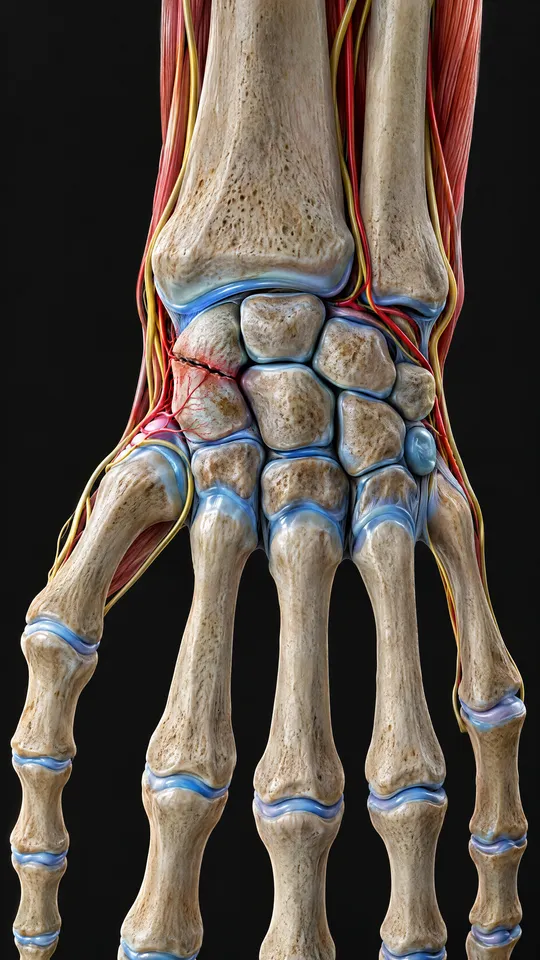
The scaphoid sits at the base of your thumb, in the row of small bones linking your hand to your forearm. Land on an outstretched hand and the force travels straight through it. For most cases, that's the whole mechanism 2.
What sets it apart is where the blood comes from. Blood enters the scaphoid at the end closest to your thumb and runs backwards toward your forearm 6, so everything upstream of a break is fed through the break. About two-thirds of these fractures happen at the narrow waist 5, the worst possible place.
NHS patient guidance states the consequence plainly: a waist fracture affecting the blood supply "can stop oxygen and nutrients reaching the bone," causing "slow healing (delayed union) or no healing (non-union)," and if it's cut off completely, "part of the bone can die (avascular necrosis)." Those complications "can cause continued pain, impairment of wrist function and early arthritis" 1.
So a wrist gets immobilised on suspicion: where the broken pieces stay close together "a fracture line is not visible on x-rays" 1, and repeat X-rays are deliberately delayed because the bone changes "may only become visible at that time or later" 2.