Osteitis Pubis / Groin Pain
Chronic pain at the front of the pelvis, most often in footballers and running athletes, that tends to get worse the longer it's played through.
Read moreGroin pain is hard to pin down. It can arrive sharply when you change direction mid-game, build slowly across a season until kicking or sprinting hurts every time, or turn up in pregnancy as a deep ache through the front of the pelvis that makes rolling over in bed the worst part of the day. Same general area, different causes, and they don't respond to the same treatment.
This guide helps you work out which one sounds like yours, what you can do now, and when groin pain needs a doctor instead of a physio.
An international group of sports medicine clinicians sorted sporting groin pain by where it starts 2. It works for yours too.
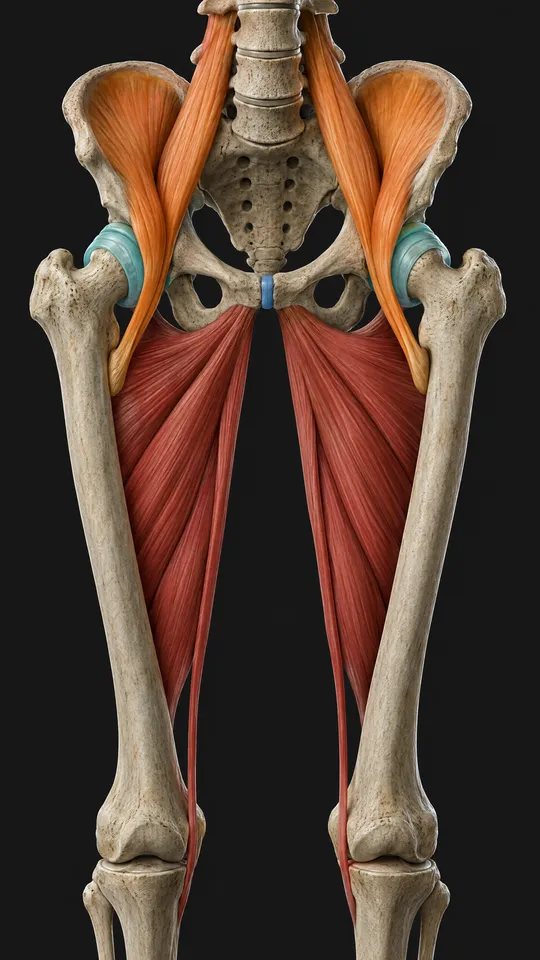
| What you noticed | What it often points to |
|---|---|
| A sharp pull with one kick, stretch or change of direction | Groin strain |
| An inner thigh ache that built up over weeks and eases once you're warm | Adductor tendinopathy |
| Pain right on the pubic bone that worsens the longer you play through it | Osteitis pubis |
| A deep ache in the hip, with stiffness | A hip joint problem |
| A lump, swelling, fever or blood in your urine | See a doctor 1 |
Treat it as a starting point. More than one source is common 3, and sorting that out is what an assessment is for.
Most groin pain is worked out with a conversation and an examination, not a scan. The international consensus on groin pain in athletes built its system on your history and a physical examination: where it hurts, what sets it off, and which tests bring on your usual pain 2. That can mean pressing along the inner thigh and pubic bone, squeezing your knees together against resistance, and moving the hip through its range 2.
Scans earn their place when the examination points to something they can show, such as a problem inside the hip joint 7. On their own they can mislead, because changes on scans are common in active people who have no pain at all 2. A lump or swelling in the groin is different: that needs a doctor to check for a hernia 5.
Chronic pain at the front of the pelvis, most often in footballers and running athletes, that tends to get worse the longer it's played through.
Read morePregnancy-related pelvic joint pain, caused by increased ligament laxity and load through the pelvis.
Read moreA strain of the adductor muscles that pull the leg inward, common in sports with sudden changes of direction.
Read moreA strain of the inner-thigh muscles, closely related to a groin strain but specific to the adductor group.
Read moreInner thigh pain that builds up over weeks from overuse, often easing once you're warm and returning after training.
Read moreThe same muscles, tendons and joints sit on both sides, so left or right groin pain follows the same list of causes above. What narrows it down is exactly where it hurts and what sets it off.
A few causes differ between women and men:
Apart from pregnancy-related pelvic pain, these need a GP first. If what we find in an assessment points that way, we'll tell you.
For groin pain from sport or exercise, healthdirect suggests 1:
It may take several weeks to improve 1. Plenty of groin conditions never need surgery and are managed with physical or exercise-based therapy 1. That part is our job.
We start by finding the source: the adductors, hip flexor, pubic bone, inguinal area or hip joint, and whether more than one is involved 2,3. From there, the plan follows the condition pages above. You can see us at Engadine, Mount Annan, Narellan or Appin, and how our sports physiotherapy works sets out the first visit.
Groin pain follows The Well Motion Recovery Path™, whichever structure is behind it. What your groin can handle decides when you step up a phase, not the date on the calendar.
How long it usually takes. It depends on the cause. Most adductor-related groin pain in team sports settles within a few weeks 7, while pain that has lasted for months usually takes 3 to 4 months to get back to sport 7. Each condition page above gives its own timeframe.
Book an assessment with us if your groin pain:
Not all groin pain comes from muscles or joints. Call triple zero (000) or head to an emergency department for sudden, severe pain and swelling in the scrotum, or a painful lump or swelling in the groin with nausea, vomiting or signs of a blocked bowel 1. Groin pain with a fever, or sudden sharp groin pain with blood in your urine, also needs an emergency department 1. For groin pain that has built up slowly or keeps coming back, book an assessment with us: we work out where it's coming from, and if it points to a hernia or another medical cause, we tell you plainly and refer you to your GP.
Most groin pain isn't urgent. Once we know where it's coming from, there's a plan for it.
Pain from the hip joint, a hernia, a pinched nerve, a kidney stone or a stress fracture can all be felt in the groin 1. In athletes, adductor problems and pubic bone pain are often hard to tell apart 4. So the first step is finding where yours is coming from.
Usually, as long as it doesn't make the pain worse. For groin pain from sport or exercise, healthdirect advises avoiding the activities that aggravate it 1, so walking that stays comfortable can carry on. If walking increases the pain or makes you limp, ease off and get it assessed.
Often, yes. Most adductor-related groin pain in team sports is short-lived and settles in a few weeks 7, and healthdirect notes groin pain may take several weeks to improve 1. Pain that keeps coming back, or lasts for months, usually needs a structured plan: see why groin pain lingers.
The urgent signs are the same for everyone: a painful groin lump with nausea or vomiting, groin pain with a fever, or sudden sharp pain with blood in your urine need an emergency department 1. Pelvic pain in pregnancy is usually symphysis pubis dysfunction, a different condition.
Yes, when the cause is muscle, tendon, joint or bone. Many groin conditions are managed with physical or exercise-based therapy, without surgery 1. If we find something that needs a doctor, we'll tell you and point you there.

How would you like to reach us?
Message us on WhatsAppFor bookings and enquiries. Please don't send medical details. Call (02) 8111 5633Request a call-back
Request sent
Thank you. We'll call you back on the number you gave us.
This is a preview, so nothing was actually sent.