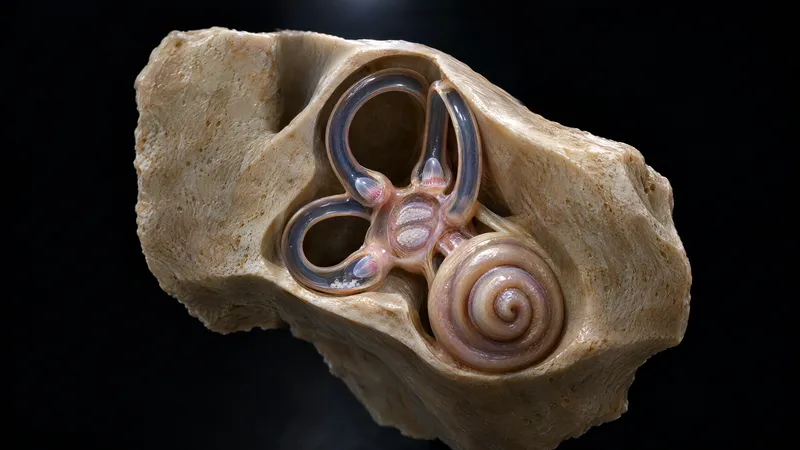
What vertigo is
Vertigo is a type of dizziness, not a synonym for it. That distinction does more work than it looks like it should.
Vertigo is the false sense of movement: the feeling that you are spinning or falling, or that everything around you is spinning, when nothing is moving 1.
Dizziness is the broader, vaguer category: feeling lightheaded, giddy or unsteady on your feet 1. Standing up too fast and having to grab the bench is dizziness. It isn't vertigo.
Why it matters: the two point at different causes, and they get investigated differently. If you tell a clinician "I get dizzy," you could be describing half a dozen unrelated problems. If you can say "the room spins for about thirty seconds when I roll onto my left side in bed," you've narrowed it down enormously before anyone has laid a hand on you.
Vertigo is also a symptom, not a diagnosis. "You've got vertigo" describes what you're experiencing, not what's causing it.
What could be mistaken for vertigo
This is the question people most often type next, and it works in both directions: things mistaken for vertigo, and things vertigo gets mistaken for.
The most common mix-up is the simplest one: plain lightheadedness. Feeling faint when you stand up, or woozy when you're tired or dehydrated, isn't a false sense of movement and usually isn't an inner ear problem at all 1.
Beyond that, several different conditions can produce a spinning sensation 1:
Vestibular neuritis and labyrinthitis
inflammation of the balance nerve or the inner ear itself, often after a viral illness. These tend to produce constant, prolonged vertigo rather than the short bursts of BPPV
Ménière's disease
episodes of vertigo that come with hearing loss, ringing in one ear, or a sense of fullness in it
Migraine
vertigo can be part of a migraine, with or without a headache. "Vestibular migraine" is a real and reasonably common pattern
Medicine side effects
an often overlooked cause, and one worth raising with your GP or pharmacist before you go hunting for anything more exotic
Head injury
including knocks that seemed minor at the time
Stroke, multiple sclerosis and brain tumour
uncommon causes, but the reason the red-flag list in the next section exists
None of those are things you can sort out from a search result, and that's the point. What distinguishes them is the pattern (how long each episode lasts, what sets it off, and what comes with it), which is what an assessment is designed to tease apart.
What's the main reason for vertigo?
Benign paroxysmal positional vertigo, usually shortened to BPPV. It's the most common cause of vertigo 1,3, and it becomes more common with age, particularly over 65 3.
The mechanism is mechanical, and it's easier to picture than the name suggests. Inside each inner ear are three fluid-filled loops called semi-circular canals that detect head movement. Beside them sits a small chamber, the utricle, holding tiny crystals of calcium carbonate called otoconia. Those crystals are meant to stay where they are. In BPPV, some come loose and collect in one of the canals. And now, every time your head moves, the loose crystals move too and send the wrong message to your brain and eyes 3.
That explains the pattern people find so strange about it. Episodes begin seconds after a head movement and last less than a minute if you keep your head still 2. The classic triggers are looking up, lying down on one ear, rolling over in bed, getting out of bed, and bending over 2: all positions, not exertion.
It also explains why BPPV comes and goes. Symptoms are usually intermittent, stopping for weeks or months and then returning 3. That's the condition behaving normally, not something going wrong.
As for why the crystals come loose: known causes include head injury, age-related changes in the balance system, damage from other inner ear disorders, and there's a recognised association with osteoporosis. But in a large number of cases, no cause is ever found 3, which is a normal finding, not a failure to look properly.
Is vertigo serious?
In the words of a government patient fact sheet: while there are some serious causes of vertigo, in most cases it is not a serious condition and usually gets better with time 2.
That's the reassurance, and it's real. Now the part that isn't negotiable.
Go to your nearest emergency department if you have vertigo along with any of these 1:
- problems with walking or coordination
- problems with your eyesight, your eye movements, or double vision
- loss of sensation or movement on one side of your body
- slurred speech or difficulty swallowing
- headache
- confusion
Those can point to a stroke rather than an inner ear problem, and that's a time-critical difference. If you've already been seen and sent home, the same list applies again: new speech or swallowing difficulty, or weakness or numbness in your face, arm or leg, means going back 2.
Short of that, the real harm vertigo does is falls. Both government sources we rely on here name falls and injury as the reason not to simply wait it out, and 3 is specific that seeking treatment early matters particularly for older people, for whom additional balance work may also be useful. That's the territory our falls prevention program covers.
The exercises for BPPV, and which ones the evidence actually backs
This is where most of the confusion sits, so it's worth being precise.
First, the thing that has to happen before any exercise. BPPV is canal-specific and side-specific. The clinical practice guideline is a strong recommendation on this point: posterior canal BPPV is diagnosed when vertigo with a particular eye movement is provoked by the Dix-Hallpike manoeuvre: moving you from sitting to lying with your head turned to one side and your neck slightly extended. If that test shows a different pattern, a supine roll test is used instead, to check the lateral canal 5. The tests aren't a formality. They tell you which ear and which canal, and the treatment is different depending on the answer.
The treatment with the strongest evidence is a repositioning manoeuvre, not an exercise routine. The same guideline strongly recommends treating posterior canal BPPV with a canalith repositioning procedure, or referring to a clinician who can 5. Australian government health guidance describes this as performed by your doctor or a specialist physiotherapist 1.
The best known is the Epley manoeuvre, and the evidence for it is good without being miraculous. A Cochrane review of 11 randomised trials covering 745 patients found the proportion of people whose vertigo completely resolved rose from 21% with sham or no treatment to 56% with the Epley 4. Read that second number carefully: it also means about one in five people got better with no treatment at all.
The limits, from the same review 4:
- The Epley is no better than the Semont manoeuvre or the Gans manoeuvre. They're alternatives, not a hierarchy
- It did beat a week of Brandt-Daroff exercises done three times daily in one study
- 36% of people had the vertigo come back after treatment
- Nausea during the manoeuvre is common: between 16.7% and 32% of patients
- Some people can't tolerate the positions at all because of neck problems
- No serious adverse effects were reported
- The trials were mostly small with short follow-up, and the evidence is current only to January 2014
The one self-administered option is the Brandt-Daroff exercise, and a Victorian Government patient fact sheet sets out the protocol in full: five repetitions to each side, taking about ten minutes, three times a day. Symptoms should settle over about ten days, and most people get back to work or normal activities within a week 2. The fact sheet also includes a line most websites leave out: the exercises will only work if you actually feel dizzy while doing them 2. They're not comfortable, and that's not a sign you're doing them wrong.
What isn't recommended. Routine treatment of BPPV with vestibular suppressant medications such as antihistamines or benzodiazepines is specifically recommended against 5, as is imaging or vestibular testing when the picture is straightforward. And vestibular rehabilitation exercises (the general balance-retraining programs often marketed as the treatment for vertigo) are listed only as an option in that guideline, not as a recommendation 5. Useful for some people; not the first thing the evidence points to.
If you want to read the mechanism and the treatment evidence in more depth, our Vertigo & Dizziness page covers it, and Vestibular Physiotherapy sets out what an appointment involves.
What to do (and what to avoid) while it settles
Practical, and all of it from government patient guidance 1,2:
- Sit or lie down as soon as the spinning starts. During an attack, lying still in a dark, quiet room helps
- Avoid the positions that set it off while symptoms are active, and try not to sleep on the affected side
- Raise your head on two or three pillows at night
- Get up slowly. Sit on the edge of the bed for a minute before standing
- Do not drive until your symptoms have completely resolved. Both sources are explicit about this one, and it's the instruction people most often ignore
One piece of widely repeated advice that the guideline specifically contradicts: you do not need to keep your head upright for a day or two after a repositioning procedure. Post-procedural postural restrictions are strongly recommended against 5. If you've been told to sleep sitting up afterwards, that advice has moved on.
Worth separating those two things clearly, because they sound contradictory and aren't. Avoiding provoking positions is sensible while you're still having attacks and untreated 2. Restricting your posture after a repositioning manoeuvre is a different thing, and it isn't supported 5.
FAQs
What am I lacking if I have vertigo?
This usually arrives as a question about a vitamin or mineral deficiency, and none of the sources behind this page support one as a cause. BPPV is mechanical: crystals out of place in the inner ear 3. The known contributors are head injury, age-related changes in the balance system, damage from other inner ear disorders, and an association with osteoporosis, and in a large number of cases no cause is found at all 3. There's a lot of supplement marketing aimed at this exact question. Buying into it is more likely to delay a diagnosis than deliver one.
What stops vertigo immediately?
Nothing stops it immediately, and we'd rather say so than sell you something. What helps during an attack is sitting or lying down as soon as it starts and staying still in a dark, quiet room until it passes 1; with BPPV, individual episodes last less than a minute if you keep your head still 2. Anti-nausea medication is sometimes prescribed, and a government fact sheet is blunt about what it does: it helps the symptoms, but will not prevent attacks and does not cure the condition, and shouldn't be needed for more than a few days 2. That's a decision for your GP, not something physiotherapists prescribe. Longer term, the thing that resolves BPPV is getting the affected canal identified and treated 5.
How long is too long to have vertigo?
Two different clocks, and it helps to know which one you're watching. Each individual BPPV episode should last under a minute if you keep your head still 2. A spinning sensation that goes on for hours or days continuously is a different pattern and worth getting checked. For the condition overall, symptoms should settle over about ten days with regular exercises, and most people are back to work or normal activities inside a week 2. As a concrete threshold: the clinical practice guideline recommends being reassessed within a month of initial treatment or observation 5. If you're past that and nothing has shifted, that's your answer.
What exercises should be avoided if you have BPPV?
Less a list of banned exercises than a sequencing problem. A repositioning manoeuvre performed for the wrong canal, or the wrong ear, isn't dangerous, it's just an uncomfortable exercise that does nothing. That's why the Dix-Hallpike and supine roll tests come first 5. Two practical cautions: some people can't tolerate the positions at all because of neck problems 4, and nausea during the manoeuvres is common enough that you shouldn't attempt one alone in a position you can't get out of 4. And as above, the old advice to restrict your head position for days afterwards is specifically not supported 5.
Do you ever fully recover from vertigo?
Many people do, and some only ever have one attack 2. But the full answer needs the other numbers too: about one in three people have a new attack within a year 2, and the Cochrane review found a 36% recurrence rate even after successful treatment 4. So "fully recovered" is a reasonable outcome and not a guarantee. What's realistic is getting the cause identified, treating it the way the evidence supports, and knowing what to do if it returns, because a recurrence usually means the crystals have moved again, not that something was missed.