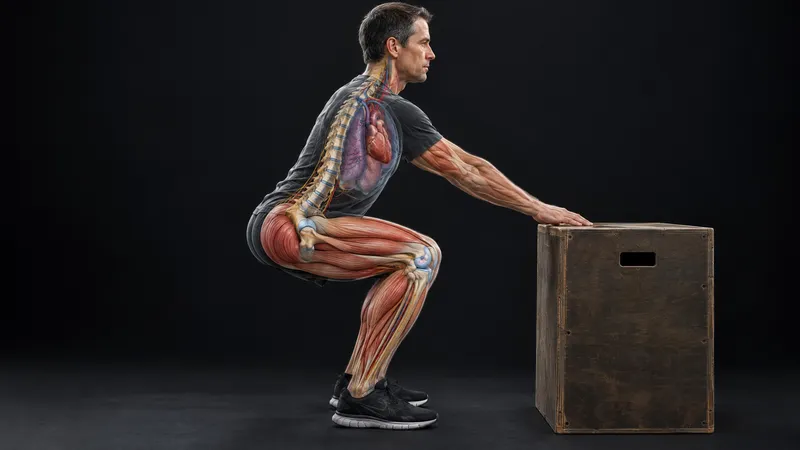
What prehabilitation means
One widely used definition puts it plainly: prehabilitation is "a process that aims to enhance a patient's physical and psychological function to support them before, during and after surgery" 1.
Two words in that sentence are worth pulling out.
The first is process. Prehab isn't framed as a standalone program you finish and forget. It's described as part of a continuum of care that runs from the moment you're referred for surgery through to your recovery afterwards 1. The preparation and the rehabilitation are meant to be one pathway, not two unrelated things that happen to involve the same body.
The second is psychological. Being told you need an operation is stressful. Prehab deliberately includes preparing you for that, not just conditioning the part of you being operated on 1. Feeling like you're doing something useful while you wait is part of the point, not a side effect.
The word itself mirrors "rehabilitation". Rehab is what happens after the operation. Prehab is the same idea, moved to the other side of it.
The four pillars of prehabilitation
If you've searched this topic, you'll have seen prehab described as having "four pillars". That's more of a shorthand than formal terminology, but it lines up with how multimodal prehabilitation is described, as four types of intervention 1:
- Exercise: cardiovascular and respiratory conditioning, strength and endurance work, and falls-prevention and balance work where that's relevant.
- Nutrition: going into your operation adequately nourished. For people at risk of malnutrition, oral nutritional support for at least seven days before major surgery is recommended 1. Whether that applies to you is a question for your surgical team or a dietitian.
- Education: understanding what the operation involves, what the first days and weeks afterwards will be like, and what you'll need to have ready.
- Psychological support: preparing for what is, for most people, a stressful event.
When researchers pulled apart which ingredients seem to matter most, exercise and nutrition were the individual components most likely to improve every critical outcome they measured 3.
A physiotherapist's role sits mainly in the exercise pillar. In prehabilitation programs, physiotherapists and exercise physiologists are the team members who carry out the initial assessment and prescribe the tailored exercise program 1. The other pillars usually involve other members of your care team, and anything to do with the surgical plan itself stays with your surgeon.
Why getting fitter beforehand is supposed to help
The logic is simple enough. An operation is a physical stress, and recovering from one asks a lot of your body: getting out of bed, managing stairs, using crutches, walking further each day. The stronger and fitter you are going in, the smaller the gap between what you can do now and what you're about to be asked to do.
Prehab sits inside a broader hospital approach called enhanced recovery, described as "an evidence-based approach that helps people recover more quickly after having major surgery". It's used for musculoskeletal operations such as hip and knee replacement 2. Among the things it suggests doing before an operation, exercise comes first: "being physically active before your operation will help you recover quicker" 2. Eating well, practising relaxation, and stopping or cutting down on smoking and alcohol are on the same list 2.
That's the theory, and it's a reasonable one. The harder question is how well it holds up when people test it.
Does prehab work?
This is the part worth going through properly, because the headline and the detail tell slightly different stories.
The big picture. A 2025 network meta-analysis pooled 186 randomised controlled trials covering 15,684 people preparing for surgery 3. Exercise prehabilitation on its own was among the interventions most likely to reduce complications after surgery (odds ratio 0.50, 95% confidence interval 0.39 to 0.64). It was also among those most likely to shorten a hospital stay, by just under a day on average (−0.93 days, 95% CI −1.27 to −0.58) 3.
Those numbers come from a large body of work, and they point in a favourable direction. But the researchers are careful about what they mean. The certainty of evidence across all comparisons was "generally low to very low due to trial level risk of bias and imprecision" 3, and the exercise-only results above were rated very low certainty 3. Their conclusion is deliberately measured: prehabilitation may benefit adults preparing for surgery and could be considered in clinical care, but larger, well-designed multicentre trials are still needed 3. The exercise and nutrition findings did hold up when the highest-risk-of-bias trials were removed, which is reassuring. That still doesn't turn low certainty into high.
Knee replacement. A systematic review of 16 trials and 968 participants found prehab improved knee function before the operation (standardised mean difference 1.23, 95% CI 0.49 to 1.97) 4. The improvement carried on for a while afterwards: an effect of 0.90 in the first month and 0.45 between six weeks and three months 4. By six to twelve months, though, there was no meaningful difference between groups (SMD 0.07, 95% CI −0.17 to 0.30), and the authors describe the long-term effects as inconclusive 4. The certainty here is also low to very low 4.
Read plainly: prehab appears to get you to a knee replacement in better shape and may make the first three months easier. A year out, the people who did prehab and the people who didn't look much the same.
Hip replacement. This is the result that stops prehab being a blanket recommendation. A review of 32 trials and 1,753 patients found that exercising before a total hip replacement showed no association with self-reported physical function at 12 weeks (SMD −0.14, 95% CI −0.61 to 0.32) or at one year (SMD 0.01, 95% CI −0.37 to 0.40), both at very low certainty 5. It also showed no association with time spent in hospital (a difference of −0.21 days, 95% CI −0.74 to 0.31), at moderate certainty 5.
So what does that add up to? Three things. The evidence consistently points in a favourable direction. The certainty behind it is low. And the size of the benefit depends heavily on which operation you're having: the knee evidence looks better than the hip evidence, and neither is settled.
That doesn't make prehabilitation a poor use of the time before your operation. It does mean that anyone telling you prehab is proven to speed up your recovery is ahead of the research. The more accurate way to put it is that it's promising, it points one way, and it's worth doing with your eyes open.
What a prehab program involves
There's no standard prehab program, because there's no standard surgery. Preparing for a knee operation and preparing for an abdominal one have very little in common beyond the principle.
What is consistent is the shape of it. It starts with an assessment, and the tools used are simple, practical measures, not lab tests 1:
- The 6-minute walk test: how far you can walk in six minutes.
- The 30-second sit-to-stand test: how many times you can stand up from a chair in 30 seconds, used to gauge leg strength and frailty 1.
- The Duke Activity Status Index: a measure of the everyday activity you can currently manage.
Those results do two jobs. They show where your real gaps are, and they give you something concrete to measure against later. Progress over a few weeks is much easier to notice when there's a number attached to it.
From there, the program is built backwards from the operation: what's being done, what your recovery is expected to involve, and what you personally need to get back to. Someone heading back to a physical job has a different finish line from someone whose main goal is being independent at home, and the preparation should look different too.
What you won't find on this page is a list of exercises with sets and reps. That's deliberate. A prehab program is prescribed from your own assessment and from whatever restrictions your surgeon has given you, and a generic list on a website can't account for either. If you'd like to know what that looks like as an appointment with us, our prehabilitation page walks through it step by step.
Before and after: one pathway
Prehabilitation makes the most sense as the front half of something longer.
Recovery is framed as part of a continuum of care that runs from the moment you're referred for surgery through to your recovery afterwards 1, and that's how we'd encourage you to think about it too. The practical advantage of doing both halves with the same team is continuity. The physiotherapist who picks up your post-surgical rehabilitation already knows your baseline, your history and what you could do before the operation. You're not starting from a blank page, or explaining everything again, at the point where you least feel like it.
It also means the goals you set before surgery are still the ones being worked towards afterwards, not quietly replaced by a generic recovery plan.
FAQs
What is the meaning of prehabilitation?
Prehabilitation is "a process that aims to enhance a patient's physical and psychological function to support them before, during and after surgery" 1. In plain English, it means using the time between being booked in for an operation and having it to get physically and mentally better prepared, so your recovery starts from a stronger position.
Does prehab really work?
It probably helps, depending on the operation, but the evidence isn't strong yet. Across 186 randomised trials, exercise prehab was associated with fewer complications and roughly a day less in hospital 3, but the certainty of that evidence was generally low to very low 3. Before a knee replacement, the benefit shows up early and is gone by six to twelve months 4. Before a hip replacement, one large review found no association with function or length of stay 5. It's a reasonable thing to do. It isn't a guarantee.
What are the best prehab exercises?
In principle, prehab exercise covers cardiovascular and respiratory conditioning, strength and endurance training, and balance or falls-prevention work where that's relevant. Progress is tracked with practical measures like a 6-minute walk test or a 30-second sit-to-stand test 1. We deliberately don't publish a set-and-rep list, because the right exercises depend on the operation you're having, the restrictions your surgeon has given you, and where your own assessment puts you. That's the part worth getting assessed for rather than guessing.
What is the best way to prepare for surgery?
Alongside being physically active, the standard advice before an operation is to eat well, practise relaxation, and stop or cut down on smoking and alcohol 2. Exercise is the part a physiotherapist helps with, but the others matter too. Anything about medication, fasting or instructions for the day itself comes from your surgical team, and their instructions override anything you read online, including this page.
How long before surgery should I start prehab?
As soon as you have a date. We can't give you a single number: the sources we rely on don't set a minimum window for exercise prehab, and what's realistic depends on your operation and how long you have. Whether that's a few weeks or a few months, bring us your date and we'll tell you what's worth aiming for in the time available.