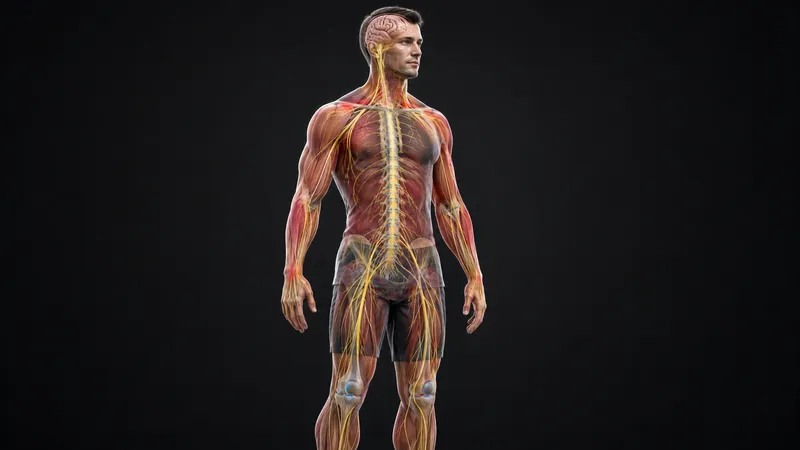
What fibromyalgia is
Fibromyalgia is a chronic (meaning long-lasting) condition that causes pain and tenderness throughout the body, together with fatigue and trouble sleeping 3. The pain is widespread, not located in one joint or one muscle, and it tends to come and go in intensity instead of sitting at a steady level.
It's more common than most people realise: about 2 in every 100 people 1, with other estimates ranging from 2% to 5% 2 and 2% to 8% globally 8. It affects more females than males, and usually shows up between 20 and 60 years of age 1.
The most useful thing to understand early is that fibromyalgia doesn't damage your body. A 2021 review of its mechanisms says so plainly: fibromyalgia "does not involve organic damage" 8. Your joints aren't wearing out and your muscles aren't tearing. That's good news, even though it can feel dismissive when it's delivered badly.
What's going on
The cause isn't fully understood, and all three of the sources we rely on say so 1,3,8. But the research has found something more specific than "we don't know".
Brain imaging studies have found evidence of altered signalling in the neural pathways that transmit and receive pain in people with fibromyalgia. Those same changes may also contribute to the fatigue, the sleep problems, and the concentration and memory difficulties often called "fibro fog" 3.
A 2021 review describes the underlying mechanism as central sensitisation: a dysfunction in the nerve circuits that perceive, transmit and process pain signals 8. In plain terms: the pain-alarm system has become turned up and oversensitive. Signals that shouldn't register as painful are being read as painful, and signals that would normally be a two out of ten arrive as an eight.
That's not "the pain is in your head". The volume knob is a real, measurable part of your nervous system, and it really has moved.
Beyond that central mechanism, the picture involves the nervous, endocrine and immune systems, changes to sleep, and genetic factors that make some people more susceptible than others 1,3,8. Symptoms often begin after physical or emotional trauma (an accident, an illness, a period of severe stress), but in plenty of cases there's no obvious trigger at all 8. If you've been searching for the event that started yours and come up empty, that's common, and it doesn't mean you've missed something.
The symptoms people notice
Most people don't arrive at a diagnosis because of a textbook symptom list. They arrive because of a pattern that built up slowly.
What usually comes first is widespread aching pain that comes and goes, waking up unrefreshed no matter how long you slept, and fatigue that doesn't match what you've been doing 1,2. The concentration and memory problems tend to be noticed later, often only once someone names them for you.
The fuller picture, across both government sources and the US National Institutes of Health, looks like this 1,3:
- Widespread pain and tenderness through the body
- Fatigue that rest doesn't fix
- Disturbed, unrefreshing sleep
- Muscle and joint stiffness, often worst in the morning
- "Fibro fog": problems with concentration and memory
- Heightened sensitivity to touch, temperature, light, smell or noise
- Numbness or tingling
Severity varies enormously from person to person 2. Two people with the same diagnosis can be living very different weeks.
Why it takes so long to get a diagnosis
Fibromyalgia is hard to diagnose, and the delay most people experience isn't anyone being careless.
There's no blood test and no scan that confirms it. A diagnosis can only be made once symptoms have lasted at least three months, and the tests you've had were being used to rule other conditions out, not to find this one 1. That's why everything kept coming back "normal": normal results were the point.
The other reason it takes time is overlap. Fibromyalgia shares symptoms with, and often occurs alongside, a long list of other conditions 1,2,3, each of which has to be considered before the label fits. The ones most often confused with it are named in the FAQs below.
One distinction to hold onto: if your pain is mostly in one place, or it travels down a leg in a defined line, that's a different picture from fibromyalgia's widespread pattern. It's more consistent with something like sciatica, and it's worth assessing on its own terms, not folding into the fibromyalgia diagnosis.
What triggers a flare-up
Flares are one of the most frustrating parts of this, partly because they can feel random. They usually aren't.
The triggers most consistently named are stress, being unwell, poor sleep, and exerting yourself too much 1. The Victorian health service adds weather changes, overexertion, mental stress, illness or injury, travelling, hormonal changes, and changes to your treatment 2.
Triggers do vary from person to person, though 2. That's why generic advice tends not to help much, and why the useful version of pacing is worked out around your pattern, not a printout. If a good Saturday reliably costs you the following Tuesday, that's information worth acting on.
What the evidence actually supports
This part needs care, because there's a lot of confident marketing attached to a condition where the research is mixed.
Exercise is the strongest recommendation there is, and that's a modest bar. The revised international guideline for managing fibromyalgia reviewed 107 systematic reviews and meta-analyses. Based on those, the only "strong for" therapy-based recommendation in the whole guideline was exercise; every other therapy assessed, including psychological therapies, medication and multimodal rehabilitation, came out as "weak for". Initial management should involve patient education and focus on non-drug approaches 4. The same paper also says the size of effect for most treatments is relatively modest 4. Both are true at once.
The underlying evidence quality is low, and honest sources say so. A Cochrane overview covering 21 reviews, 381 studies and 37,143 participants across chronic pain conditions, fibromyalgia included, found the quality of evidence for physical activity and exercise to be low, largely because studies were small and underpowered. Effects on pain and physical function were favourable but mostly small-to-moderate and not consistent across reviews, and follow-up rarely extended beyond three to six months 5. Adverse events were few: mostly increased soreness or muscle pain that settled after a few weeks 5.
What exercise does appear to do, specifically. A 2017 meta-analysis focused on fibromyalgia found therapeutic exercise reduced pain, improved global wellbeing and depressive symptoms, and improved both the physical and mental components of health-related quality of life. Aerobic and muscle-strengthening work came out as the most effective for reducing pain and improving wellbeing; combined exercise had the biggest effect on depressive symptoms 6. A pair of 2008 clinical practice guidelines reached a similar place, recommending aerobic fitness exercise and strengthening exercise for managing fibromyalgia, while noting that most of the trials behind them were rated low quality 9,10.
Actual dosing, with its own caveat. A 2025 meta-analysis of aerobic exercise prescription in fibromyalgia landed on something concrete: two to three sessions a week, 25 to 40 minutes each, aiming for more than 100 minutes a week in total, starting at low intensity and building gradually over six to twelve weeks 7. The caveat belongs in the same breath: of its 17 included studies only six were at low risk of bias, and the overall effect on pain was modest 7. Useful numbers to build a program around; not a guarantee.
The type matters less than you'd think. There's no one form of exercise that's better than another, so the sensible choice is whatever you'll realistically keep doing, started slowly and built up very gradually 2,7. Walking or water-based exercise is often a good place to start 1.
Where the evidence is unclear, we'll say so. On TENS (a small device that delivers mild electrical stimulation through the skin), Victorian health information states there is not enough high-quality evidence to say whether it's effective for fibromyalgia symptoms or not, though some people do find it helpful 2. Researchers disagree about this, and we'd rather show you the disagreement than pick the flattering side. On acupuncture, the same source describes low to moderate-level evidence that it improves pain and stiffness, but notes the effects are short-lived (up to about a month), so repeated sessions would be needed 2.
On medication. Antidepressants, nerve-pain medicines and pain relievers are all real parts of the management picture described in the literature 1,2. Those decisions sit with your GP or a medical specialist; physiotherapists don't prescribe or administer them, and we won't pretend otherwise. If your care involves both, we're glad to work alongside it.
What happens if you just live with it
Plenty of people do, usually because nobody offered them anything better. But the alternative to a structured approach isn't neutral.
Untreated, the realistic trajectory is gradual deconditioning (doing less because it hurts, then hurting more because you're doing less) alongside a real mental health risk. Australian government health information is direct about the complications: people with fibromyalgia have an increased risk of depression, anxiety and suicide, and may experience more pain and a higher risk of complications after surgery 1.
We're not saying that to scare you. It's the reason education plus exercise is the recommended first stage of management, not an optional extra 4. And it's why self-management and pacing are worth real effort: they've been shown to reduce pain and improve quality of life 1.
If the mental health side is where you're struggling right now, please treat that as urgent, not secondary. Lifeline is available on 13 11 14, any hour of the day, and Beyond Blue offers support specifically around depression and anxiety. Talk to your GP too.
Where physiotherapy fits
We're not going to tell you we can cure this, because nobody can 1. What a physiotherapist can do is more specific.
Australian government health information lists physiotherapy among the referrals that help, noting a physiotherapist can help you design an exercise program that will work for you 1; Victorian health information says much the same 2. Given exercise is the only "strong for" recommendation in the international guideline 4, that's not a small role.
The practical value is in the individualising and the pacing. Knowing the dose from the research is one thing. Working out where your current tolerance sits, what your particular flare triggers are, and how to progress without buying a three-day setback: that's the part that's hard to do alone, and the part self-management and pacing advice keeps pointing to 1,2.
That's what our chronic pain management program is built for: structured, progressed, and designed around what you're trying to get back to, not a generic routine.
FAQs
What are the 7 signs of fibromyalgia?
First, "the 7 signs" is a listicle framing, not a clinical criterion set. The real diagnostic anchor is widespread pain lasting at least three months 1. That said, the symptoms most consistently listed by government and NIH sources are: widespread pain and tenderness; fatigue; disturbed, unrefreshing sleep; muscle and joint stiffness; "fibro fog" (concentration and memory problems); heightened sensitivity to touch, temperature, light, smell or noise; and numbness or tingling 1,3. You don't need all seven to have fibromyalgia, and having several of them doesn't confirm it either; that's what the rule-out process is for.
What is commonly mistaken for fibromyalgia?
Quite a lot, which is why diagnosis takes time. It's confused with, and often co-occurs with, rheumatoid arthritis, lupus, osteoarthritis, chronic fatigue, irritable bowel syndrome and migraine 1,2; the NIH also names ankylosing spondylitis and chronic back pain 3. The most useful way to tell them apart: unlike arthritis, fibromyalgia doesn't cause joint damage or inflammation 8. That's also why blood tests and scans are used to exclude these other conditions, not to confirm fibromyalgia 1.
At what age is fibromyalgia typically diagnosed?
Most commonly between 20 and 60 1, with Victorian health information describing it as tending to develop during middle adulthood 2. The NIH notes it can affect people of any age, including children, but usually begins in middle age, and the likelihood increases as you get older 3.
What's the life expectancy of someone with fibromyalgia?
None of the government or research sources we use gives a life-expectancy figure for fibromyalgia, and we're not going to invent one. What they do establish is that fibromyalgia does not involve organic damage to the body 8; it isn't progressively destroying tissue. The risk to take seriously is a different one: increased risk of depression, anxiety and suicide, plus more pain and a higher risk of complications after surgery 1. If that's where you are, contact your GP, and Lifeline is on 13 11 14 at any hour. Beyond Blue can help too.
What foods should I avoid with fibromyalgia?
There's no evidence-backed fibromyalgia elimination diet, and no source we rely on names a specific food to avoid. What Victorian health information does say is more general: a healthy, balanced diet can help with energy levels, maintaining your weight, and an overall sense of wellbeing 2. Detailed dietary advice sits with your GP or a dietitian. It's outside a physiotherapist's scope, and we'd rather point you to the right person than guess.