What the Cross Bracing Protocol is
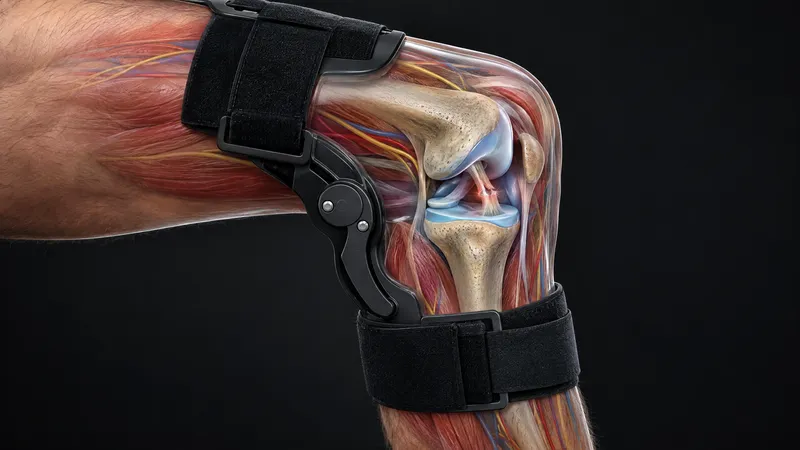
The Cross Bracing Protocol, usually shortened to CBP, is a non-surgical way of managing a fresh ACL rupture. The idea behind it is simple enough to explain in a sentence: if you hold the knee bent at 90 degrees, the two torn ends of the ligament sit closer together, and given enough time in that position some ACLs appear to heal across the gap on their own 1.
It's an Australian development, which is why you'll see the question phrased as "the Cross Bracing Protocol in Australia" so often. The protocol was developed in Sydney, the foundational study came out of an Australian private practice 1, and the only randomised trial testing it is running across Melbourne, Sydney, Brisbane, the Gold Coast and Perth 5.
It isn't a wait-and-see option or a way of avoiding treatment. It's a structured 12-week medical and rehabilitation program with a hard start-date requirement, involving a doctor as well as a physiotherapist.
What the 12 weeks involve
For the first four weeks the knee is locked in a brace at 90 degrees. It stays on at all times, including while you sleep and shower 1. Most people in the original series reported some mild, temporary discomfort while they adjusted to sleeping with the knee bent that far 1.
From week four, the brace range is opened in weekly increments. By week 10 the knee is allowed unrestricted range, and the brace comes off at 12 weeks 1,5. One detail: the first four patients in the original series came out of the brace at nine weeks, and the protocol was then deliberately extended to 12 1.
Physiotherapy runs the whole way through: fitting the brace, adjusting its range each week, and supervising rehabilitation during the bracing phase and well after it 1,5. A brace with nothing built around it isn't the protocol.
There's also a medical side that sits outside physiotherapy entirely. As studied, the protocol includes prescribed blood-thinning medication (an injectable anticoagulant initially, then rivaroxaban 10mg for the first eight weeks), MRI scans to check on healing, and, in 14 of the 80 patients in the original series, a platelet-rich plasma injection 1. Those are decisions for a doctor, not a physiotherapist.
What the evidence in favour actually shows
The foundational study followed 80 consecutive patients through the protocol 1. At three months, 72 of them (90%) had a continuous ACL on MRI. Among those 72, half showed the most complete healing (graded 1), 40% were grade 2 and 10% grade 3 1.
Those grades turned out to matter a great deal. Overall, 79% were back to their pre-injury sport at 12 months, but that split sharply by how well the ligament had healed: 92% of the grade 1 group returned, against 62 to 64% for grades 2 and 3 1. Knee stability followed the same pattern, with normal laxity in 100% of the best-healing group compared with 40% of the rest 1.
Healing wasn't all-or-nothing, and its quality predicted the outcome.
But the design of the study limits how much weight any of it can carry. It was a case series: 80 private-practice patients who chose this pathway, followed as they went. There was no comparison group, no randomisation, and the examiners and radiologists weren't blinded. The authors say so themselves, and state plainly that longer follow-up and clinical trials are needed before this should change clinical practice 1.
What the evidence against it shows
The strongest published challenge came from a controlled cohort study of 80 patients aged 16 to 40, all with an acute non-contact isolated ACL rupture, all playing pivoting sports and all intending to return to them 2. Forty chose surgical stabilisation and 40 chose the Cross Bracing Protocol, and the two groups were matched on age, BMI, sex, knee dominance and posterior tibial slope.
At two years the differences were stark. Recurrent instability (the knee giving way again) occurred in 70% of the bracing group against 2.5% of the surgical group. Medial meniscal tears followed the same split, 62% against 2.5%. Every patient-reported outcome measure favoured surgery 2. The authors' conclusion was blunt: the protocol "is associated with an unacceptably high rate of recurrent instability when used to treat ACL ruptures in patients taking part in pivoting sports" 2.
Keep two things in mind. It's the best comparative evidence currently published, and it isn't flattering. And its scope was narrow: pivoting-sport athletes intent on returning to pivoting sport, the hardest test the protocol could be put to, not a general-population finding.
In September 2026 the research group behind the protocol, including its originators, published a formal letter disputing the methods of that cohort study 3. We can't tell you what the specific criticisms are; the letter sits behind a journal paywall and only its title is publicly indexed, and the people writing it are not neutral parties. What it does tell you is that two research groups are publicly disagreeing about this right now, which is a fair description of where the science sits.
The argument won't be settled by either paper. The EMBRACE trial (180 participants aged 16 to 40, randomised between the protocol and early reconstruction, followed for 18 months, funded by a $1.73 million Medical Research Future Fund grant with the Australian Physiotherapy Association and Medibank as partners) is the first randomised comparison, and it was still recruiting at the time of writing 5. Until it reports, nobody has a randomised answer, however confidently it's presented.
The risks that don't make the headlines
The same study that produced the 90% figure also recorded what went wrong, and those numbers deserve equal billing 1:
- Re-rupture: 11 of 80 patients (14%), at an average of 10 months after injury, ranging from five to 18 months. Nine of those 11 went on to have a reconstruction anyway.
- Blood clots: two patients (2.5%) developed a below-knee DVT in the second week, before anticoagulant medication was added to the protocol as standard.
- Loss of movement: 11 patients (14%) had a 5 to 15 degree flexion contracture (a knee that wouldn't fully straighten) when the brace came off. All of them resolved with physiotherapy within three weeks.
A stiff knee after 12 weeks in a brace is predictable and treatable, provided there's a rehabilitation program waiting on the other side.
Who it's realistically for, and why timing decides it
The hard limit is how recently you injured the knee. This is a treatment for an acute rupture, and the window is short. Patients in the original series started bracing a median of five days after injury, with most between four and 11 days, and eligibility required being seen within a month 1. The EMBRACE trial is stricter again, enrolling only within 15 days of injury 6.
If you're six weeks past the injury, this pathway has almost certainly closed, and no amount of bracing later reopens it. That's frustrating to read, but it's better than finding out after chasing it for a fortnight.
Beyond timing, suitability isn't settled. The counter-evidence is concentrated in one group: pivoting-sport athletes intending to return to their sport 2, which is the group most likely to be reading this. It doesn't rule the protocol out for them, but anyone in it deserves to see that study before choosing.
How this differs from the surgical pathway
The two routes aim at different things. A reconstruction replaces the torn ligament with a graft, and the rehabilitation that follows is built around that graft maturing over nine to 12 months, which is the pathway we cover in detail on our ACL injury and rehabilitation page. The Cross Bracing Protocol tries to heal the ligament you already have, and spends the first 12 weeks doing something reconstruction rehab never does: keeping the knee still on purpose.
The early phase differs most. After surgery you work on range and quadriceps activation almost immediately; on the bracing pathway range returns gradually from week four and properly from week 12, which is why that flexion-contracture figure exists.
After the brace comes off, the two pathways converge more than people expect. Both end in the same place: rebuilding strength and control, and earning a return to sport against measurable targets rather than a date on a calendar.
Where a physiotherapist fits
Three parts of this are physiotherapy. Fitting the brace and adjusting its range week by week. Supervising rehabilitation through the bracing phase, so the rest of the leg doesn't deteriorate while the knee is held still. And running the rehabilitation afterwards: the strength, control and return-to-sport work that decides how the 12 weeks pay off 1,5.
That last phase is ordinary sports physiotherapy and post-surgical rehabilitation work, and it looks much the same whether the ligament healed in a brace or was replaced with a graft.
What isn't physiotherapy: prescribing the anticoagulants, ordering and interpreting the MRIs, or giving injections. The protocol as published is run by a medical team with a physiotherapist in it, not by a physiotherapist alone, so if you're considering it, ask directly who manages which part.
Making this decision without being steered
The information around you is not neutral, and the research says so. A survey of 734 people with ACL injuries found reconstruction was portrayed as the best option by 85% of orthopaedic surgeons, 65% of GPs, 61% of physiotherapists and 59% of sport and exercise physicians, and that most information online is unbalanced and heavily favours surgery 5.
A few grounded reference points. Unless you're a high-level athlete, there's a four in five chance the knee recovers to near normal without surgery; high-level athletes usually don't do well without it 4. Around 50% of people who try rehabilitation first avoid needing surgery at all, which is a finding about rehabilitation on its own, not about the Cross Bracing Protocol 5. And surgery has its own downsides: most people recover well but it takes hard work, and it's unlikely the knee will ever be quite as good as it was 4.
There's a free, independent patient decision aid at aclinjurytreatment.com that's been used by more than 53,000 people 5. It's a useful place to start before anyone gives you an opinion, including us.
FAQs
What is the success rate of the ACL cross bracing protocol?
There's no single agreed answer yet, and be cautious of anyone who gives you one. The original 80-patient case series found 90% had a continuous ACL on MRI at three months and 79% returned to their pre-injury sport at 12 months, with 14% re-rupturing 1. A separate controlled study of pivoting-sport athletes found 70% had recurrent instability with the protocol against 2.5% with surgery 2. Those studies looked at different groups of people and measured different things, and the randomised trial that would settle it hasn't reported 5.
What is the 12-week cross bracing protocol?
The knee is immobilised in a brace at 90 degrees of bend for the first four weeks, worn at all times including sleeping and showering. The range is then opened in weekly increments, unrestricted range is allowed from week 10, and the brace is removed at 12 weeks, with physiotherapist-supervised rehabilitation running throughout and continuing afterwards 1,5. The original series started at nine weeks for its first four patients before the protocol was deliberately extended to 12 1.
Is it better to do ACL surgery or not?
That depends heavily on who you are. Unless you're a high-level athlete, there's a four in five chance the knee recovers to near normal without surgery; high-level athletes usually don't do well without it 4. About half of people who try rehabilitation first avoid surgery 5. But pivoting-sport athletes intending to return to their sport had far worse instability outcomes with bracing than with surgery 2. Start with the independent decision aid 5 and an individual assessment, not a rule of thumb.
Am I too late for the Cross Bracing Protocol?
Quite possibly, and it's the first thing to check. The protocol is only offered for a fresh rupture: patients in the original series began bracing a median of five days after injury, and eligibility required being seen within a month 1. The current trial enrols only within 15 days 6. If you're weeks past that, this pathway has closed, but structured rehabilitation hasn't, and it's still the thing that decides the outcome either way.